Linda's Lunacy

Faith, Home, & Family

  • Home
  • ABC’s
  • Childhood Cancer Awareness Resources
  • Gardening
  • Giveaway Linky List
  • Gluten Free
  • Homeschool
  • In the Kitchen with Linda
  • Home
  • About Linda
  • Disclosure & Privacy Policy
  • PR Friendly
  • Get My Button

Krafty Max – Handmade With Love Giveaway Sponsor

February 2, 2011 by Linda @ Linda's Lunacy

The Handmade with Love Winter Giveaway starts in just a few hours. I’d like to introduce you to one of the sponsors of Linda’s Lunacy for this giveaway.


1 - dragonfly right - km originals text.jpg

Kraft Max Originals has beautiful jewelry, bookmarks and other beaded items in her Shop.

Here a few items that I found in her shop. She has a lot of great items. I had a really hard time picking a few to share with you.

These are stitch markers. Used for marking your place when  your crocheting. They are so beautiful, and come with the holder so you won’t loose them in between projects. I love these! Practical and beautiful!

     Rose Garnet Watch  - OOAKLook at this watch! She has numerous watches to choose from, all equally beautiful.

This bracelet is so pretty!

 Red Jasper Flower SetOh my, this Red Jasper Flower set! How gorgeous is this?

She makes all these beaded items by hand herself!  The next time your looking for something for yourself, or a beautitful gift for someone else, please visit Kraft Max Originals. You can also visit Kraft Max on Twitter and Facebook.

Come back starting tonight at midnight to enter the Handmade for Love Winter Giveaway at Linda’s Lunacy to win a beautiful necklace and earring set from Krafty Max. It’s not one of the ones pictured it, you’ll have to come back to see how beautiful it is!

*Disclaimer – I received no compensation for this post. Krafty Max is sponsoring the upcoming giveaway, but I received no products.


Filed Under: Reviews

The Purpose and Power of Authority – A Book Review

January 31, 2011 by Linda @ Linda's Lunacy

It is time for a FIRST Wild Card Tour book review! If you wish to join the FIRST blog alliance, just click the button. We are a group of reviewers who tour Christian books. A Wild Card post includes a brief bio of the author and a full chapter from each book toured. The reason it is called a FIRST Wild Card Tour is that you never know if the book will be fiction, non~fiction, for young, or for old…or for somewhere in between! Enjoy your free peek into the book!

You never know when I might play a wild card on you!

Today’s Wild Card author is:

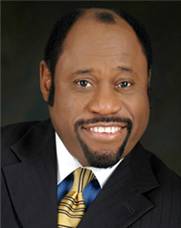
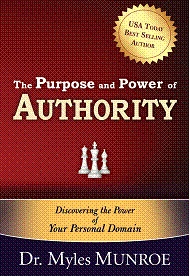
Dr. Myles Munroe

and the book:

The Purpose and Power of Authority: Discovering the Power of Your Personal Domain
Whitaker House (January 4, 2011)

***Special thanks to Cathy Hickling of Whitaker House for sending me a review copy.***

ABOUT THE AUTHOR:

Dr. Myles Munroe is a best-selling author, founder and president of Bahamas Faith Ministries International, a motivational speaker, and consultant for government and business. He has spent the last thirty years training leaders worldwide in business, education, government and religion. Dr. Munroe completed undergraduate and postgraduate studies at Oral Roberts University and the University of Tulsa. He is the recipient of honorary doctoral degrees from a variety of schools and serves as an adjunct professor of the Graduate School of Theology at Oral Roberts University. Dr. Munroe and his wife Ruth are the parents of two grown children and travel as a teaching team.

Visit the author’s website.

SHORT BOOK DISCRIPTION:

Are you walking in your unique calling? Do you know that you have an inherent, personal authority that is meant to guide your life? In his new book, best-selling author Dr. Myles Munroe explains that many people don’t know how to live out their dreams or find their place in the world because they don’t understand the principle of true authority. Until one discovers his or her unique, God-given areas of authority and responsibilities, he or she may spend a lifetime feeling unfulfilled or lost. Discovering one’s personal authority is the key to fulfillment and effective living, Dr. Munroe maintains. He explains not only how to discover one’s inherent authority, but to how to respond constructively to others with confidence, free of fear and intimidation. Dr. Munroe has said that he feels this book contains his most significant teaching to date.

Product Details:

List Price: $12.99
Paperback: 224 pages
Publisher: Whitaker House (January 4, 2011)
Language: English
ISBN-10: 160374262X
ISBN-13: 978-1603742627

AND NOW…THE FIRST CHAPTER:

What Is Authority?

Chapter One

Authority Is Within You

You Have Personal Authority and Power to Fulfill Your Purpose in Life

Neither the judges nor the audience expected anything from the plain-looking, middle-aged, unemployed woman from Scotland who was a contestant on the reality television show Britain’s Got Talent in the spring of 2009. When asked what her dream was, Susan Boyle answered, “I’m trying to be a professional singer.” As she talked with the judges before her performance, they were openly skeptical, and many of the audience members rolled their eyes and shook their heads incredulously, perhaps thinking this contestant had been included for a comic element by the producers of the show. When the introductory notes of her song started to play—“I Dreamed a Dream,” from the musical Les Miserables—some audience members even looked as if they were anxiously holding their breaths, afraid that this unassuming, naive woman would humiliate herself before millions of people.

Then, she began to sing.

With lyrical tones, compelling emotion, and a professional delivery, she sang the song as if she had written it herself to describe her unfulfilled life up to that point and her hopes for the future. Most of the audience members were clapping, cheering, and standing when she had sung just a few lines, and she received a resounding standing ovation at the conclusion of her performance. In minutes, she went from being perceived as a joke to being considered an inspiration and a role model for all who are seeking a second chance in life, or for all who want a first chance to manifest to the world who they are on the inside.

Susan Boyle became an international phenomenon overnight through her television appearance, the popularity of the tape of her performance on YouTube, and the overwhelming attention of the media. People were captivated by her voice and moved by her story of decades of struggling and longing to make something of her life.

Though her instantaneous rise to fame has caused inevitable stress for her along the way, she seems to have come to terms with the crush of attention. After finishing the contest in second place, she went on to build the professional singing career she had always dreamed of. Her debut CD, I Dreamed a Dream, has sold over eight million units worldwide as of this writing. The apex of her dream came to pass when, during the historic visit of Pope Benedict XVI to England and Scotland in September 2010, she was chosen to sing for the Pontiff at the conclusion of his open-air mass in Glasgow, which was attended by 65,000 people.

What does authority have to do with a television performance or even a singer? Doesn’t authority have to do with exercising some jurisdiction or control over other people? Doesn’t it involve, for example, leaders and followers, bosses and employees, parents and children, teachers and students, law enforcement officers and lawbreakers—in other words, those in charge and those under them who are instructed, directed, ordered, or made to do something?

Every Person on Earth Has Authority

There is an underlying aspect of authority that has not often been acknowledged or addressed by leaders, corporations, governments, and individuals but that is crucial for effective and fulfilling human endeavor. It provides the key not only for individual accomplishment but also for corporate success.

Susan Boyle’s story illustrates the essence of authority, as well as the heart of this book: true authority is personal, and true authority comes from within.

Authority does not mean having power or control over others.

Authority is not something you automatically receive with a title, either, such as “manager,” “boss,” “CEO,” or “president.”

Personal authority is inherent within every human being, whether that person is considered the one “in charge” or the one following orders. Authority is also inherent within every living thing created on earth. It is natural. It does not have to be “worked up,” and it cannot be given to someone—only released and developed.

Personal authority can be defined as the intrinsic gifts a person or thing possesses in order to fulfill the purpose for which that person or thing was placed on this earth. Because authority is intrinsic, every person or living thing already has the ability to fulfill his/her/its authority in the area, or the domain, of his/her/its gifting.

You have a personal authority that enables you to fulfill your purpose on earth. Have you identified your own personal authority? If you believe you have, are you functioning in it to the fullest extent that you would like to and that you are able to?

Four Foundational Principles for Understanding Authority

In this book, you will discover how to apply four foundational principles for understanding authority and entering into the power of your personal domain:

1. The Principle of the Author: The release of your personal authority is linked to the origin of your gifts and power, by which you can fully carry out your life’s purpose through your personal domain. Once you discover the true source of the authority that is inherent within you, opportunities for experiencing fulfillment and for contributing your unique gifts to the world will open wide.

2.The Principle of Authorization: You not only have personal authority within you, but you also have the permission and the right to carry it out in the world. No matter what your past experiences have been, or no matter what restrictions you have previously felt, you have the authorization you need to start fulfilling your life’s purpose. You’ll discover the key to that authorization in coming chapters.

3.The Principle of Authenticity: No person is truly authentic until he is manifesting his inherent authority. Once you understand and become your true self—who you were born to be—your life takes on authenticity. In other words, you are real, or authentic, while you are being who you were meant to be and doing what you were meant to do. In the following pages, you will learn how to identify and develop your authentic self.

4.The Principle of Authority: The above three principles lead to this fourth and foremost principle of authority, which is twofold. First, everyone and everything is designed to fulfill its purpose. Because your authority is inherent, you are automatically equipped to be what you have been authorized to be and to do what you have been authorized to do. You have been designed to fulfill your life’s purpose. Your personal authority guides the focus of your life and enables you to accomplish what you were born to accomplish. Second, everything depends on and must yield to something else in order to function, grow, prosper, and succeed. As you read this book, you will increasingly see how you can tap into your unique design and begin to apply it to the various aspects of your life. Your personal authority will emerge, and you will be able to live an effective life as you work in collaboration with others to fulfill each other’s purposes.

Authority Is Personal but Not Exclusive

Because authority is in essence personal, some people make the mistake of thinking that it is therefore exclusive to them and has nothing to do with others. They may think, I’m following my personal authority, so don’t get in my way. Or, they may tend to pursue their unique gifts and abilities only for what they can get out of them. Yet that perspective does not reflect the nature of personal authority, which is designed to operate in concert with other people and for the benefit of others, as well.

Since authority is within every person, and since humans are social beings who interact in social institutions, what happens when my authority meets your authority in the family, in the government, in the church, in the business world, and in other relationships and realms of human interaction? Authority works in such a way that people’s personal authorities are interrelated and function interdependently in corporate life. This isn’t just an observation but a vital principle: we need each other’s authority to fulfill our own.

Personal authority is carried out in the context of many realms of life and in association with a variety of human interactions and organizations. It operates in conjunction with collective human endeavors, such as we experience in families, communities, governments, churches, nonprofit organizations, schools, small businesses, and large corporations.

Yet none of these relationships and endeavors can truly thrive and be successful unless each individual associated with them understands his personal authority and is operating under it. Personal authority empowers each person to contribute his greatest gifts and skills for his own fulfillment and for the benefit of the whole community—no matter how large or small that community may be.

What Is Your Dream?

What is your dream for yourself, your family, your business, your organization, or your nation? Many people don’t know how to live out their dreams or find their true place in the world because they don’t understand how to put into practice the above principles of authority. You may have some idea of your personal authority but are not fulfilling the vast potential still inside you; you recognize that you are living well below your abilities.

What is true on a personal level is also true on a corporate level. Most of our corporate, community, and national problems come from the fact that people do not truly understand or live in their personal authorities or function in the interdependent nature of authority, which occurs when people blend their gifts to work together for the good of the whole.

Three Keys to Activating Personal Authority

In Susan Boyle’s case, her potential to inspire and entertain people through her inherent gift of music had been limited through a series of setbacks, not the least of which was early rejection by her peers, and the low self-esteem that resulted. Apparently, as she grew older, even though she sang locally, she increasingly had a sense that life was passing her by.

What led to the change in her circumstances?

First, she was aware of her inherent, inner authority—her tremendous singing ability—and had not let that talent fall by the wayside but had tried to develop it as best she could. Personal authority is dependent upon your truly knowing yourself, knowing the authority inside you. It is impossible to exercise your authority if you do not know yourself.

Second, although circumstances in her life had prevented her from having a professional singing career in the past (she had even sent demo CDs to music companies, without success), Susan tried one more time. She made a conscious decision to act on her inherent authority. In fact, she had promised her mother, who had passed away, that she would “be someone.” Her success at “being someone” was not initiated by the fame and acclaim she received but because she exercised her inherent authority—who she was gifted to be—and the world took notice. When she employed her authority, she discovered the very real power of her personal domain.

Third, even though it was outside of her “comfort zone,” she submitted to placing herself in a situation where others could recognize her personal authority and enable her to pursue and develop it to the highest extent. Once she was willing to let that happen, her obvious talent commanded attention. The discovery of Susan Boyle’s outstanding musical gift serves as an excellent example of the nature of one’s personal authority and its interdependence with the personal authority of others. Please note carefully that I did not say her gift was created but rather “discovered.” The Britain’s Got Talent television show did not give authority to her singing gift but simply provided the stage for the release of her authority. In essence, she had always possessed the authority of her gift in the domain of singing, but she needed an audience and an opportunity to serve it to the world. Yet she almost didn’t try to be a contestant on the television program because she thought she was too old to pursue her dream. You are never too old or too young or too poor or too rich or too anything to pursue your inherent authority. What is natural within you will manifest itself if you allow it to.

Your Personal Domain

King Solomon, one of the wisest people who ever lived, wrote, “A gift opens the way for the giver and ushers him into the presence of the great” (Proverbs 18:16), and “Do you see a man skilled in his work? He will serve before kings” (Proverbs 22:29). Susan Boyle’s gift made a way for her—it brought her before influential people who opened doors that enabled her to fulfill the inner dreams and longings she had held all her life. Although she had already exercised her gift in various ways in her local community, there was an even greater realm in which she was meant to share it.

Your authority also has a domain in which it is to be exercised. The size or scope of that domain, and whether you become “well-known” is not the issue. The issue is whether you will recognize what is inherent within you and exercise your gift for yourself and others. Your authority is your unique leadership ability in the world.

Many people allow their true authority to remain untapped. They have neither discovered nor pursued their special ability to contribute to their generation. Whether one is genuinely operating in one’s gifts is not necessarily measured by outward success. Both a multimillionaire businessman and a single mother struggling to make ends meet can still have hidden, untapped authority that, once released and manifested, will bring something of tremendous value to their lives and the lives of others.

The only way you can exercise true authority is to recognize and start functioning in the power of your personal domain.

Counterfeit and Authentic Pursuits

When people violate the principles of authority, it is usually because they don’t have a foundational understanding of what genuine authority really is. Many individuals who have great gifts, talents, dreams, and promise have destroyed their futures by failing to implement these principles.

For example, many people pursue prosperity or fame for their own sakes, but these pursuits are not authentic. Instead, people should be pursuing their inner authority. They will discover that when they do so, prosperity will come toward them. Our prosperity is found where our authority is.

True authority is the right and the power to be who you were created to be. You can be a more effective parent, carpenter, hairdresser, entrepreneur, CEO, teacher, student, pastor, government official, or any other role or calling—you can be a more effective person—if you discover your true authority and understand and live out its principles.

If you have already discovered your personal authority and are pursuing it, you can be even more effective in it by applying the principles of authority delineated in this book. You can discover how they operate and what they can do in your life and vocation as you interact with theirs in various realms of life and learn how to blend your personal authority with others’ for greater results. You’ll also learn the origins of your personal authority, why authority works, how authority works, and how to implement it.

If the concept of personal authority is new to you, or if you have been frustrated because you know you have something to contribute to your generation but don’t feel you have been exercising your personal authority and want to be effective in it, you will find the tools you need in this book. Everyone can exercise authority because authority is within each of us.

Why Many People Are Afraid of Authority

Although everyone has personal authority, and although all the major realms of human interaction involve the use of authority, personal authority is still one of the most misunderstood principles in human relations.

Because of this, most people I meet are afraid of authority to some degree. You may be one of them. You may have picked up this book with some measure of apprehension. That is understandable, considering the way authority has been modeled for many of us. Most people misunderstand authority because they have never seen it in its true form. Authority has been misconceived, misdefined, misrepresented, and misused. We’re afraid of it because we don’t understand its nature and purposes. As a result, it is seen as a negative element rather than a positive one.

You may have had a bad experience with a parent, a teacher, an employer, or another “authority figure.” You may be a woman or a member of a race or community who has been told you are inferior and who has been prevented from developing your abilities to the fullest. Perhaps you have been a victim of oppression in which religious authority was used to control your life or, even worse, a religious authority figure took advantage of your trust and mentally or physically abused you. If that is the case, your distrust, fear, and hatred of authority are understandable. Or, you may be among those who believe that only people who have a certain title or a type A personality or who reach a certain “level” in life can have authority.

Authority as an aspect of life has been misunderstood and misused to the point that it has often become the opposite of what it was meant to be. Yet you will discover in this book that the nature of genuine authority is the antithesis of suppression and oppression and is actually the source of true freedom and fulfillment.

In the next chapter, we’ll explore some of the distorted and restricted views of authority that people have accepted, and the misconceptions they breed, which have brought us to what I believe is an actual crisis in authority. In every country of the world, people misunderstand, misuse, or abuse authority. As a result, we have too much of the wrong kind of authority and too little of the right kind of authority. Our failure to understand authority has led to a decreasing quality in people’s lives and a lack of true order, peace, and progress in societies and cultures of the world.

What Are You Authorized to Do?

Authority is therefore the key to fulfillment and effective living, the means to proper function in life, and the guarantor of success. Authority is the law of maximum performance. It is also the means of powerful, positive influence in other people’s lives. If authority is all of these things, then is it imperative that we all understand this critical concept? Obviously, yes.

Unless you know what you’re authorized to do in life, you will always experience some degree of dissatisfaction, uncertainty, frustration, and perhaps even anger in regard to your circumstances. Yet, you have the opportunity, responsibility, and ability to develop your own personal authority and carry out your unique purpose in life in conjunction with others.

You are uniquely designed for what you were born to do through your gifts, abilities, and personality. No matter what other people may have told you in the past about your potential, you can release the principles, power, and protection of authority into your life.

Each of the following chapters is designed so that, as you proceed through this book, you will gain a more complete picture of true authority and the many applications of authority to your life that will free you to be all you were meant to be. You’ll learn about the basic realms of authority and how to live fruitfully in each.

Through The Purpose and Power of Authority, you will come to…

recognize what true authority is—and what it is not
understand your own personal, inherent authority
discover how to identify the “territory” or area of life you are authorized to

oversee
learn the origins of true authority
gain order, simplicity, and peace in your life
respond constructively to others in their own realms of authority
exercise your intrinsic power and gifting
lead others into their own personal authority
live confidently and purposefully
be true to your life calling
maximize your gifts, talents, and skills
find true prosperity
work with joy

Susan Boyle determined to do something with her life after years of disappointment and therefore exercised the authority within her. “I made a promise to be someone,” she said. I want you to make that same promise to be someone. That “someone” is your true self manifested to the world. Susan Boyle not only has used her authority, but she is an authority. True authority is self-manifestation.

In the next few chapters, we will look at some foundational principles of authority that are an essential background for understanding and implementing your personal authority.

My Review:

Authority. A word many people have trouble with. God is the author and creator of authority. Not man.

There are different kinds of authority. Personal authority is defined in this book as “the intrinsic gifts a person or thing possesses in order to fulfill the purpose for which that person or thing was placed on this earth”. Our own personal authority has nothing to do with being in authority over someone or being under another persons  authority.

I found this book a very interesting read. This book will help you recognize: what true authority is, and what it is not,  understand your personal authority,  learn the origins of true authority,  live confidently and purposefully,  be true to your life calling,  and maximize your gifts, talents and skills.

The Purpose and Power of Authority covers all kinds of authority. From the church, to the government, from the workplace to the home.

Authority, however, does not function without submission, and submission is invalid and meaningless if it is not in the contest of true authority. In face, submission is dangerous without genuine authority because what is sometimes called “submission” is actually a belittling and oppression of others. from page 266

If you have trouble with authority, or live or work with someone who does. Or if you want to use your gifts and talents to fulfill Gods plan for your life, you will find The Purpose and Power of Authority a helpful book.

Filed Under: Books, Reviews

Health Care You Can Live With – A Book Review

January 28, 2011 by Linda @ Linda's Lunacy

It is time for a FIRST Wild Card Tour book review! If you wish to join the FIRST blog alliance, just click the button. We are a group of reviewers who tour Christian books. A Wild Card post includes a brief bio of the author and a full chapter from each book toured. The reason it is called a FIRST Wild Card Tour is that you never know if the book will be fiction, non~fiction, for young, or for old…or for somewhere in between! Enjoy your free peek into the book!

You never know when I might play a wild card on you!

Today’s Wild Card author is:

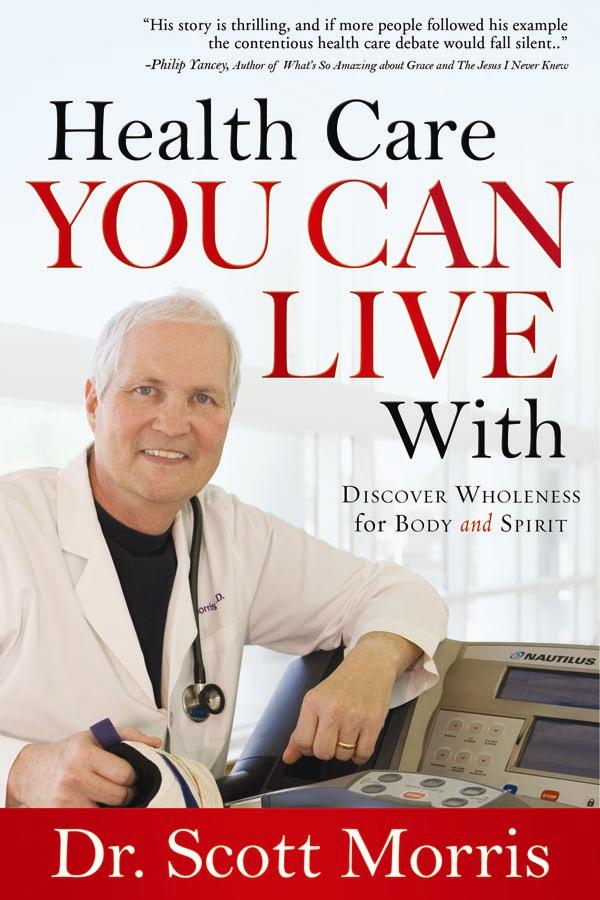
Dr. Scott Morris

and the book:

Health Care You Can Live With
Barbour Books (January 1, 2011)

***Special thanks to Audra Jennings, Senior Media Specialist, The B&B Media Group for sending me a review copy.***

ABOUT THE AUTHOR:

From the time Scott Morris was just a teenager, he knew he would do two things with his future—serve God and work with people. Growing up in Atlanta, he felt drawn to the Church and at the same time drawn to help others, even from a very young age. It was naturally intrinsic, then, that after completing his Bachelor of Arts degree from the University of Virginia he went on to receive his M.Div. from Yale University and finally his M.D. at Emory University in 1983.

After completing his residency in family practice, Morris arrived in Memphis, Tennessee, in 1986 without knowing a soul, but determined to begin a health care ministry for the working poor. He promptly knocked on the doors of St. John’s Methodist Church and Methodist Hospital in Memphis inviting them to help, and then found an old house to refurbish and renovate. By the next year, the Church Health Center opened with one doctor—Dr. Scott Morris—and one nurse. They saw twelve patients the first day and Morris began living his mission to reclaim the Church’s biblical commitment to care for our bodies and spirits.

From the beginning, Morris saw each and every patient as a whole person, knowing that without giving careful attention to both the body and soul the person would not be truly well. So nine years after opening the Church Health Center, he opened its Hope & Healing Wellness Center. Today the Church Health Center has grown to become the largest faith-based clinic in the country of its type having cared for 60,000 patients of record without relying on government funding.

He is an ordained minister in the United Methodist Church and remains a board certified physician who continues to do rounds at Church Health Center.

Visit the author’s website.

SHORT BOOK DISCRIPTION:

Health Care You Can Live With is an astute and biblical perspective of total wellness that empowers the individual to ultimately see from Jesus’ example what it means to be human and to be intimately connected to God in that humanity. “Jesus asks us to care about what he cared about—wellness and wholeness. Healing that flows through personal care, preventive activities, medical methods, and technology announces that the kingdom of God is here,” says Dr. Scott Morris. “We cannot separate healing from the gospel message. If we’re going to do what Jesus did, and as his first century followers did, we must find some way to be involved in a ministry of healing.”

An ordained minister with twenty years as a family practice physician serving a diverse population in Memphis, the nation’s poorest major city, Morris is uniquely experienced in the challenges of our health care system today. Health Care You Can Live With offers a surprising behind-the-scenes visit into the troubles we are currently facing around the issues of health care and health care reform. With a thoughtful yet candid approach, Morris invites the reader to question what we really know about health care. Who does our health care system serve and what does it do or not do for others? And, most importantly, what should be the response of the Church—and the individual Christian?

Product Details:

List Price: $19.99
Hardcover: 256 pages
Publisher: Barbour Books (January 1, 2011)
Language: English
ISBN-10: 1616262478
ISBN-13: 978-1616262471

AND NOW…THE FIRST CHAPTER:

Nobody wants the government deciding when you’re going to die.

When I was a fourth year medical student, I met a witch doctor.

It wasn’t easy. I spent a summer in Zimbabwe on a medical research project, and I took my curiosity about faith and healing with me on a few side trips. I wanted to meet a nyanga, a witch doctor, and I started asking about it as soon as my feet hit the ground in Zimbabwe. To meet a nyanga, you must have permission from a sort of nyanga association, so I asked permission. After two months of being turned down, I was running out of time. Finally I received permission just before I was due to return to the U.S. I arranged to see a nyanga on a sugar cane plantation in southern Zimbabwe, right on the South Africa border. Dressed in overalls, he rode his bicycle in from his fields to meet with me in his house.

He took me into a back room and might as well have taken me into another world—candles, incense, a zebra skin, snakeskins. I asked a few questions about the kinds of ailments people came to him with and how he treated them. In simple cases, he pulled something from his shelves of herbs and roots, and in complicated cases he consulted his ancestral spirit. When this happened, the ancestor would take over the nyanga’s body and tell him what kind of advice to give to the patient.

And then I asked my deepest question. In two months of working in Zimbabwe, I saw that people went to the nyanga, and then immediately went to see a Western doctor. Clearly they believed Western medicine would help, but they always went to the nyanga first. Why?

The nyanga explained to me, “They come to me because I can tell them why they are sick.”

Western doctors don’t answer that question beyond a scientific-sounding answer about infections and disease. But that wasn’t what the people in Zimbabwe were asking. They sought a spiritual answer to the question, “Why am I sick?” The nyanga generally would answer, “Because you failed to honor your ancestors,” and tell patients what they should do to honor their ancestors. Then the people went to the doctor for medicine. They knew the Western doctor’s medicine would make them physically well, but it would not stop the cause of the illness, which they did not believe was physical in origin.

The Zimbabweans who went to both the nyanga and the doctor knew you cannot separate body and spirit. Treating one without the other does not make you well. Don’t get me wrong. I’m not saying every physical symptom results from some failure in a person’s life. I am saying being well is about more than fixing a broken part of your body. The dominant approach to health care in the United States concerns broken bodies more than broken lives. We’ve developed systems that put people through hoops to get care but too often don’t make them healthier.

Our system says, “Keep Out.”

Eve was forty-six when her life shattered. She had a good job, a happy family, and no significant history of illness. Then one night her chest started to hurt and she had a heart attack. An emergency bypass operation saved her life, but not the circulation in her legs. In a matter of days, surgeons amputated both her legs. During that one prolonged hospitalization, Eve used up her entire lifetime insurance benefit. Clearly she was going to have ongoing medical needs, so she applied for the state’s version of Medicaid—and was turned down because she had health insurance. Somehow it didn’t matter that she had no more benefits available under her policy.

Laura was two years old and asleep on her mother’s lap when I met her. Laura had IGA deficiency, a disease of the immune system that made her susceptible to infections. Her mother, Jill, brought Laura in because she seemed to have a sinus infection. Jill calmly explained why she had come to the Church Health Center. A number of years earlier, her husband had a relationship with a woman who later turned out to be infected with HIV. Now he was in the final stages of AIDS. When he became unable to work, Jill went back into the workforce. Getting a job—even without insurance benefits—meant she lost Medicaid coverage for herself and Laura, whose IGA deficiency required frequent medical attention.

Frank, a construction worker, fell off a ladder and hurt his shoulder. Even though he was in excruciating pain, he waited four days to see a doctor. It didn’t take ten seconds to see what the problem was when he turned up in my exam room. An x-ray confirmed he had broken his collarbone and would need surgery to give him the use of his shoulder and arm. When I told him, he started to cry. “How can I afford to pay for this, especially when I can’t work?”

Health care is a mess. People who need help can’t always get it. Financial repercussions, not health repercussions, dominate their decisions. People like Eve and Laura and Frank are not so far away from you. Maybe you know somebody like this. Maybe you are somebody like this.

We have a health care system that says, “Keep Out.”

Keep out if you’re poor, but not poor enough.

Keep out if you are not part of an employer’s insurance plan.

Keep out if a computer can’t automatically assign you neatly into a category.

Keep out if you are an illegal immigrant.

The question of health care reform pushes buttons in a lot of people—including me. If you’re like most people, you wonder if all the talk about the health care crisis will bring any meaningful change. You have real life questions and you want to know how legislation on such a major issue affects you and your family.

“Does this mean I can stop paying so much in premiums?”

“Are they trying to tell me what doctor I can see?”

“They’re not going to reduce my coverage, are they?”

“Can I keep my kids on my policy?”

“How much is this going to cost me?”

“Why should I have to buy insurance if I don’t want to?”

If we want lasting change in our health care system, however, we have to step back and ask the bigger questions.

Why is our health care system so broken in the first place? If we don’t come face to face with what’s broken, we can’t fix it.

Who benefits from changes to the system? Will Eve and Laura and Frank be better off? Will you?

What does “health care” even mean?

Are more people going to be more well, or will more people simply have cards in their wallets?

Opinions on these questions are all over the board. You’re going to find out what I think as you continue to read this book. History teaches many lessons, and it even sheds light on the kind of care doctors offer you. Whether you are employed or unemployed, insured or uninsured, disease-free or living with a chronic condition, the “system” that comes out of our history affects your health care.

When the Church Health Center opened in 1987, twenty-six million Americans were uninsured. Today that number is close to fifty million, and the Congressional Budget Office estimates it could grow to fifty-four million by 2019. If all goes perfectly, the health care reform legislation signed into law in 2010 will be fully in place by 2019 and provide coverage for thirty-one million uninsured Americans. That still leaves twenty-three million people without insurance. On top of that, millions more—perhaps as many a hundred million—will be underinsured as costs continue to rise. The government subsidies offered under the legislation are unlikely to be sufficient for full-blown insurance coverage. High deductibles essentially will mean the insurance plan has little effect on day-to-day health care. Steep out-of-pocket costs will still deter people from seeking care, even if they have insurance. If a plan does not reimburse physicians adequately, patients will have trouble finding doctors who accept the plan. And although a policy may kick in for a major illness, individuals still will bear costs they may never recover from financially. More than 60 percent of bankruptcies are related to medical bills, and three-fourths of these people have health insurance when they become ill.

People who cobble together income from multiple part-time jobs will remain uninsured. The new insurance plans in the 2010 legislation will remain out of reach financially. Certainly the immigrants among us will qualify for nothing. No matter what your views are on immigration, if someone who cleans our houses or cuts our lawns gets sick, we have an obligation to provide care.

We would all agree that the 2010 legislation launches us out into a brave new world of health care. Nothing about it is certain. Jesus said, “The poor will always be with you.” So far he has been right. If he ever asks me, “Where were you when I was poor and sick?” I want to be able to answer, “I cared for you as best I could.”

Doctors learn to keep out.

Doctors learn to practice medicine by taking a medical history and asking questions around the symptoms the patient describes. Ninety percent of the diagnosis is based on what the patient tells you. The doctor formulates an opinion about what is causing the problem, and then performs a physical exam to collect more information about the suspected cause. Eventually diagnostic tests may confirm what the doctor thinks.

This process also says, “Keep Out.”

Keep out of my heart.

Keep out of my sorrow, my stress, my fatigue, my relationships.

Keep out of my private space. Just fix what hurts.

Eve, the woman who lost her legs after a heart attack, rocked continuously in her wheelchair the first time she came to see me in my practice at the Church Health Center. I tried to ignore it, but her husband asked, “Do you think you can do anything about her constant rocking?” I spoke to our pastoral counselor, and right away he said, “Often when people rock, it means they want to be held.” He was absolutely right. Eve rocked herself because she felt deformed and unlovable and unable to interact physically with her family as she always had. When I talked to Eve’s husband again, he immediately took her in his arms. She never rocked in my presence again.

Every day, every single day, doctors tell patients there’s nothing wrong because they find no physical root for patient complaints. If we can’t see a spot on a screen, a squiggle of dye on a test, a crack in an x-ray, or a level in the blood, then nothing is wrong. The person is “healthy.” Whatever is amiss is not a matter for the health care system. Probably this happens to you. The doctor reassures you that you are “fine,” but you wonder why you don’t feel fine. Plenty is wrong. Spiritual and emotional issues manifest in physical ways. But our health care system draws a line and says, “Keep Out.”

Palmer was ninety years old when he developed pneumonia and was admitted to the hospital in the middle of the night. When he stopped breathing, someone called a code, did CPR, resuscitated him and put a tube down his throat to keep him breathing. For two weeks, he lay in a bed in the intensive care unit, where they never turn the lights off, with a tube down his throat.

When a loved one finally asked, “Palmer, do you want a kiss?” this ninety-year-old man was ready to yank out the tube. The health care he needed at that moment—clearly he was dying—was not technology, but human contact. He wanted that kiss more than anything. But for two weeks the heath care system had said “Keep Out” to his basic need.

Change means letting go.

Health care is a mess. People want change.

But to what?

Nobody wants the government deciding when you’re going to die. That’s not what health care reform is about. It’s not about how many people carry a card imprinted with the name of an insurance company. It’s not about living two weeks longer in a brash ICU. It’s not about access to extreme technology in every small town.

Efforts at health care reform fail because they avoid the essential questions of wellness. The starting point is off kilter. Our health care system is built on the premise of waiting for people to break in some way and then come through our doors, where we will use our technological wizardry to fix them. “Access to health care” has come to mean having a card that lets you get through those doors. For too long we have accepted this definition of health care.

That’s not health care. Caring for health means attending to the things that keep you well long before you break and need the door to technology. And believe it or not, doctors are only one part of true health care.

Change means getting used to the unfamiliar. For many people it’s easier to clutch a tight fist around what is old and broken than to open our hands to receive something new and different. This happens with health care, even if the care we currently receive doesn’t make us healthier. We hang on to what we know for all the wrong reasons.

In the next couple of chapters, we’ll take a look at some history and attitudes that got us where we are today. Then we’ll delve into what you can do to bring change to your own health care. Once you see the bigger picture of what’s wrong with our health care system, you’ll see you don’t have to settle for the status quo.

It’s time to let go of a broken health care system and venture into real health.

Filed Under: Books, Reviews

Trusting God To Get You Through – A Book Review

January 27, 2011 by Linda @ Linda's Lunacy

It is time for a FIRST Wild Card Tour book review! If you wish to join the FIRST blog alliance, just click the button. We are a group of reviewers who tour Christian books. A Wild Card post includes a brief bio of the author and a full chapter from each book toured. The reason it is called a FIRST Wild Card Tour is that you never know if the book will be fiction, non~fiction, for young, or for old…or for somewhere in between! Enjoy your free peek into the book!

You never know when I might play a wild card on you!

Today’s Wild Card author is:

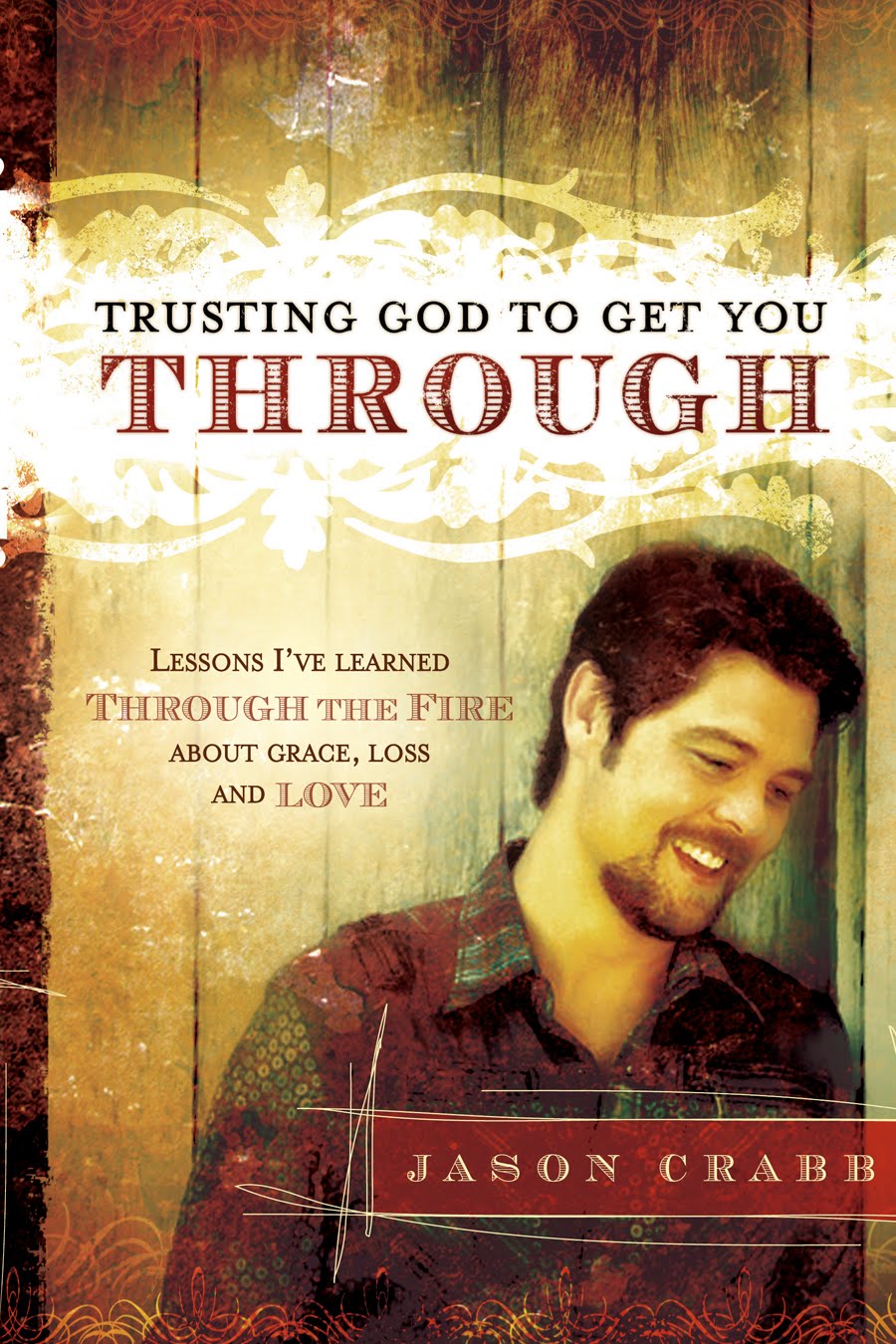
Jason Crabb

and the book:

Trusting God to Get You Through
Charisma House (January 4, 2011)

***Special thanks to Anna Coelho Silva | Publicity Coordinator, Book Group | Strang Communications for sending me a review copy.***

ABOUT THE AUTHOR:

Best known as the powerhouse lead vocalist for one of Gospel’s most acclaimed and awarded groups, The Crabb Family, Jason Crabb’s career has already been an incredible ride. While garnering multiple Dove Awards, three GRAMMY nominations, and 16 #1 singles with his family, Jason has become one of the Christian music community’s most acclaimed vocalists. Crabb has become a “fan favorite” at the Grand Ole Opry, appeared regularly on the Gaither Homecoming Series videos, and was honored to sing for the Rev. Billy Graham’s final crusade in New York. He has sung with the legendary Brooklyn Tabernacle Choir, among many other diverse and prestigious opportunities. His solo album debuted at #1 on Nielsen SoundScan’s Christian/Gospel Christian Retail chart the week following its release in 2009.

Visit the author’s website.

SHORT BOOK DISCRIPTION:

More than anything else, this book is about an amazing God who reaches down and touches ordinary lives. It is a testimony of all He has done for Jason Crabb’s family and for the people he has been privileged to meet throughout the years on the road. He wrote this book because every soul walks through the fire of adversity. Most of us have walked that plank several times. Whether the life of your dreams is unfolding before your eyes, or you are losing hope that it ever will, you have tasted a trial or two. No human being with breath in his lungs can say, “Difficulty has never darkened my doorstep.” You may have entirely different life experiences than Jason. Yet, when you look in the rearview mirror, you can see the high points and low points of days gone by. The important thing—the truly amazingthing—is that like Jason—you came through all of it. There may be a scar or two to remind us of the past, but the past is behind us. Jason Crabb wants you to know that you came through it for a reason.There is something God is yet going to do with you. The important things to remember is that you can go through the fire—any fire—with God’s help.

Product Details:

List Price: $14.99
Paperback: 224 pages
Publisher: Charisma House (January 4, 2011)
Language: English
ISBN-10: 1616381744
ISBN-13: 978-1616381745

AND NOW…THE FIRST CHAPTER:

Just hold on, our Lord will show up

And He will take you through the fire again!

…Trust the hand of God, He’ll shield the flames again.

Facing Life’s Questions

So many times I’ve questioned certain circumstances

Things I could not understand.

Every song I sing has lyrics centered on a strong gospel message, although the sounds are similar to musical genres that are popular today. Sometimes those familiar styles open doors to exciting and unexpected opportunities to sing outside of mainstream gospel circles.

I’m jazzed by invitations to take part in nontraditional gospel events. One such invite led to the stage of the Grand Ole Opry, a place like no other in the world. Just being on that stage is an honor; how that particular night played out—well, it added to my amazement and demonstrated God’s willingness to use unusual circumstances in the fulfillment of His will.

Talk about irony! The sponsor of our portion of that night’s program was a watering hole in Nashville. You heard me right; our segment was sponsored by a bar—and what an amazing night it turned out to be. From that iconic stage I was privileged to share a

testimony that was fresh in my heart.

“Through the Fire” was part of my testimony that night. Like all my dad’s songs, it speaks to experiences that are common to all people. The song has run like a thread through the fabric of my own life. I told the audience at the Grand Ole Opry as much,

explaining how the song had ministered to Shellye and me during a painful season.

It was a poignant moment when I shared how God had brought us through the trauma of losing two precious babies in separate miscarriages. Although the shock of those losses was still fresh in our thoughts, fresher still was the miracle of God in bringing our season of heartbreak to an end. That night—February 14, 2003—I had the pleasure of sharing breaking news from our house: Shellye and I had just experienced the birth of our first child! Our daughter, Ashleigh Taylor, had been born the day before, and she and her

momma were doing just fine.

After the audience heard our songs and our testimony about Ashleigh’s birth, a woman stopped us outside the auditorium. Like most everyone else at the Opry, she had come to hear the music. But God had more than music in mind for her. With tears streaming

down her face, she said, “I didn’t have any idea I was coming here for this tonight, but I rededicated my life to God—right here at the Grand Ole Opry—sponsored by a bar!”

Life doesn’t always follow the script that makes sense to us. That was true for this woman, and it was true of our miscarriages. The birth of Ashleigh had come after many long days of testing and trial. So many times the dream of raising a family seemed bound

in thick layers of impossibility. Yet deep down, Shellye and I knew that we were not alone in the fight. God’s Word told us so. Many nights the Scriptures comforted and strengthened us. We had His assurance that He would bring us through:

When you pass through the waters,

I will be with you;

and when you pass through the rivers,

they will not sweep over you.

When you walk through the fire,

you will not be burned;

the flames will not set you ablaze.

For I am the Lord, your God.

—Isaiah 43:2–3

Shellye and I walked through some fire. Yet God brought us out and blessed us—radically! Today we have two daughters, Ashleigh Taylor and Emmaleigh Love. They are as beautiful as can be, just like their mother. I will tell you more about them later, but first let me tell you about the love of my life.

My Cowgirl

My earliest awareness of Shellye came when someone brought me a picture of her and said, “You’ve got to meet this girl.”

My reaction was, “Yeah, she’s kind of cute. Yeah, I’d like to meet her.”

I guess I played down my curiosity in front of my friend, but I thought the girl in the picture was beautiful. Little did I know that someone had shown that beautiful girl a picture of me. It was a shot from the album Looking Ahead, a record our family made

even before we started singing full-time. I had a crazy hairdo at the time—a comb-over with a curl that dropped right down the center of my forehead. My hairstyle looked like a 1950s throwback. Shellye wasn’t impressed.

Her reaction was actually stronger than that. She looked at the photo and said, “No way. I don’t think I’d like him at all.”

She then pointed to my curl, saying, “I don’t know about that.”

Sometime later, the Crabb Family was invited by Kentucky Educational Television (KET) to be part of an outdoor concert in Rosine, Kentucky, the home of bluegrass and the birthplace of Bill Monroe, the man known to this day as the Father of Bluegrass

Music.1 KET asked us to sing for a documentary they were making about Kentucky music.

Friends had told me ahead of time that Shellye planned to come and see me at the concert. Things didn’t go exactly according to plan, however. She and her folks arrived after our set was over. We were headed off the stage when I spotted Shellye getting out of a car.

I never took my eyes off her; I watched her walk across the field and toward the stage. I might not be able to tell you what Shellye wore yesterday, but I can tell you exactly what she was wearing in Rosine. She cut straight across that field in blue jeans, a flannel shirt, and roper boots.

Shellye was the prettiest girl I had ever seen. She looked even more beautiful than her picture. My heart skipped a beat—maybe two—and I remember thinking, “Well, I’ve got me a little cowgirl with long, curly hair.”

I wasn’t the only one who noticed Shellye. Our drummer asked, “Who is that?”

I said, “Let’s go meet her.”

“Yeah, I want to meet her,” he said.

We talked to Shellye for a while. Then it hit me: I didn’t need to help the drummer get to know Shellye; I needed to head him off at the pass! Just as quick as you can bat an eye, I asked her, “Hey, what are you doing tonight?”

“I’m going to church,” she replied.

“Well, good, because I’m going with you.” I didn’t ask her if I could accompany her; I just told her we were going to church together. It was bold, but it was OK with Shellye.

She was comfortable knowing that her stepmom knew me. In fact, her stepmom was Kathy’s cousin. So, I wasn’t a complete stranger, and church seemed like a safe first date.

In the meantime, we tried to get out of the blistering heat. The only place that was even slightly cooler than that hot Kentucky field was the inside of our old GMC bus. It was our family’s first bus, and it burned almost as much oil as it did gas. It wasn’t pretty, but

it had places to sit and offered shelter from the sun. It even had a recliner that we had installed for on-the-road comfort.

Shellye sat in the recliner, and I stood in the stairwell. We just talked and talked until it was night. By the time we left for church, one thing was certain: our meeting was no accident. The hours I spent with Shellye were like nothing I had ever experienced. We

were clearly drawn to one another and found it easy to talk and laugh together. It sounds like a cliché, but we felt almost as though we had known each other for some time.

That night, Shellye and I went to church. At some point, I learned that she was seeing someone, but the relationship was not serious. The next day, the fellow Shellye had dated called her before I did. She refused to come to the phone. She had already decided that she didn’t want to talk to anyone but me.

When I finally called, it was Shellye’s turn to be bold. She asked me whether I was coming over and said she wanted to see me again. I didn’t have to think twice about my answer. I just said, “I’ll come over.”

When I got to Shellye’s house, she and her twin sister answered the door. Seeing the two of them caught me by surprise, but I got over it. There was no doubt in my mind: there was only one Shellye, and she was the girl for me.

The memories of those days are strong. The slightest reminder can trigger my senses and transport me back in time. During our courtship, I made it a habit to pick up some watermelon gum and a Dr. Pepper on my way to Shellye’s house. To this day, the

sight, smell, or taste of either one affects us, and each year the first October breeze reminds us of the day we met.

My Better Half

Years ago, I prayed and asked God to bring the right woman into my life. I knew it was important to find not just a good woman but the right woman. God answered my prayers. Shellye is everything I need and everything I am not. She helps me to remain rooted

in what matters. She helps me to strike a healthy balance between family and ministry. She helps me to stay grounded when I’m on the road.

Shellye is an amazing wife and mother and the perfect helpmate. Of course, she is much more than that. Ask anyone about Shellye, and they will tell you that she is a rock. In fact, that’s what they call her: the rock. She is content in life. She is comfortable with our

roles and all they entail. She is supportive of me while at the same time fulfilled as a stay-at-home mom. Her deep contentment brings me peace. I know that when I’m on the road, I don’t have to worry about her or my kids. Shellye has it all in hand.

Not everyone who travels enjoys the kind of homecomings I do. Not every spouse can deal with the things Shellye takes in stride. Keeping the home fires burning is not a chore for my wife. When I return from a stint on the road, I enter a home bubbling over with

warmth and love. It is inviting and reassuring and demonstrates Shellye’s wholeness. Her joy is a great blessing to our family. As a man,

I can’t imagine a better home life than the one I’ve got. As a father, I can’t imagine a better mother for Ashleigh and Emmaleigh.

One of my favorite pastimes is watching Shellye and our girls interact. She’s got a way about her that brings tears to my eyes. Whatever the activity, Shellye is right beside them. When they are learning their Scripture memory verses, Shellye is there. Already,

Ashleigh can quote nine verses of a psalm at a single clip, in part because Shellye is so supportive. As a mom, she is dedicated to helping both our daughters succeed in their endeavors.

Not that being a full-time mom is easy, especially when your husband travels as much as I do. Shellye is the nightly homework helper, the daily taxi, the resident chef, and keeper of all things domestic. Yet she relishes her life. She sincerely enjoys shuttling the girls to and from school and cheerleading practice—and not as a drive-by mother, either. Shellye is very involved at our girls’ school and finds ways to contribute and be a blessing to the staff and faculty.

As a life partner, Shellye is my perfect match, emotionally and otherwise. I value her opinion. She is smart, objective, wise, and knows me better than anybody else does. When questions arise as to the direction of ministry or the choice of songs for an album

or which producer or record company is right, I know I can go to Shellye for straightforward, reliable input.

Being transparent and at ease in our conversation is something we have been able to do since that first day in Rosine. There are no egos in the way. We just keep it simple and honest. That freedom allows us to grow individually and as a couple. After a two-andone-

half-hour concert, Shellye will say, “Honey, that set was too long.” I don’t try to convince her that a one-hundred-fifty-minute concert is a great idea. I take my wife’s advice seriously; I know she has my best interests at heart. At the same time, she knows I trust her and won’t be offended by the truth. In the end, if you can’t tell each other the truth, you have to wonder how solid your relationship really is.

One of the reasons Shellye and I came together in the first place has to do with transparency. At the very beginning, it was clear that Shellye loved me for who I was and not what I did. It wasn’t about the music, the recognition, or anything like that. In fact,

when we first fell in love, she didn’t know the extent of my musical and ministry life.

Shellye liked me as I was. As a result, she brought out the best in me. I had experienced relationships that lacked that kind of truth. In school, everyone had their crush and their reasons. I was a country kid with no fancy home or cars or anything to draw attention

to me. I wasn’t very popular with the girls. In fact, they usually gave me the brush-off. They weren’t interested in me—at least, not until I sang at a school variety show. Then, all of a sudden, the girls noticed me. Suddenly, I was in demand.

He who finds a wife finds what is good and receives favor from the Lord.

—Proverbs 18:22

Shellye did not operate that way. She loved me first and learned about what I did afterward. We were blessed in that when we started our relationship, we truly loved each other. We weren’t drawn by illusions or impressions or any other distractions. That has proved to be a good foundation for the rest of our life together.

Shellye’s Testimony: It’s Not About Me

I met Jason in Rosine, Kentucky, when I was sixteen years old. In all of Kentucky, I may have been the only person who hadn’t heard of the Crabb Family. All I knew was that my stepmom and my father were taking me to a concert. There was a guy there my stepmom

wanted me to meet.

Moments after I met Jason, he asked me, “What are you doing tonight?”

I said, “I’m going to church.”

Without the slightest hesitation, he said, “I’m going with you”— which he did!

That is where our relationship began. We hit it off from the start, but since we lived seventeen miles apart, it wasn’t easy getting to see one another. Not only that, but Jason was on the road a lot. Often he would come in during the middle of the week, wake up

at six in the morning, and drive over to Central City, where I lived. He would take me to school and return in the evening to pick me up and take me home.

Just about every time Jason came to get me, I would ask him, “What should we do tonight?”

Jason’s answer was always the same: “We’ve got to put up posters.”

The posters let everyone know when the Crabb Family would be singing. Once each month, they gave a concert in Owensboro, Kentucky. It took lots of posters to get the word out. That is how we spent most of our dates. And since the Owensboro concerts

happened every month, we were never done hanging posters. Jason and I dated for three years. In 1997, I graduated from high school, and on May 12, 1998, Jason and I got married in my home church. I was nineteen, and he was twenty-one. Our backgrounds

were very similar; my parents divorced when I was only four years old, and my dad raised me; my twin sister, Kellye; and our older sister, Leslie.

Because my dad worked on the railroad and was gone a lot of the time, my grandmother lived with us and cared for us kids. She was very involved with my sisters and me and played a very significant role in our lives. So did Dad. He worked really hard to make a living for all of us. My dad and grandmother did a great job raising us—and they made sure we were in church every time the doors opened!

After two years of marriage, Jason and I learned that I was pregnant. We were scared, yet excited. Starting a family was something we both wanted very much. But almost as soon as our dream was underway, it was threatened. Early in the pregnancy, I started having complications. Soon afterward, I had a miscarriage. Jason and I were devastated to lose our baby. We couldn’t understand why this had happened to us.

About a year and a half later, I got pregnant again. Our hopes were high, but we lost that baby too. It hit us hard. I remember asking the Lord over and over again to give me the strength to get through the ordeal. He did.

Yet getting through the miscarriages was only part of the process. For so long I struggled with the loss of our babies and the disappointment that followed. At times I almost questioned God; I wanted to ask Him why He allowed everyone but us to have babies.

The loss of our children did not make sense to me. Still, I kept praying. At some point I realized that my focus was centered on me and what I wanted. I was preoccupied with the way I thought things should turn out. What I really needed was to get to the point where it wasn’t about me.

Through prayer and dedication, I eventually got to where I needed to be. It wasn’t about us anymore. It was about what God wanted for our lives. The day came when I could agree with the psalmist who said, “Not to us, O Lord, not to us but to your name be the glory, because of your love and faithfulness” (Ps. 115:1).

Emotionally and spiritually, the change in perspective was dramatic. It not only kept us grounded in our trust of the Lord, but it also helped Jason and me to mature. Needless to say, our growth in this area was not easy; we were being stretched and tested. When you are in a situation like we were in, you sometimes wonder whether it will ever end.

Then one day, God spoke to me! He promised me a child. His promise did not come about right away, yet I knew I had heard His voice. And I knew He was faithful.

Shellye’s Testimony: Look to the Future

When Jason is onstage, he often tells the story of an evangelist friend who told us to buy a box of Pampers—before we had even conceived. The man’s name is Jay Boyd. Jason has known him since childhood when Jason and his family attended Jay’s revival meetings. Jason played drums for Jay at some point, and they have kept in touch over the years. The way Jason tells it, Jay could preach wallpaper right off the walls. I don’t doubt it. Jay is fearless about saying whatever he believes God wants said.

We bought that box of Pampers. Every day it served as a reminder that our promise was on its way. It was a tangible symbol of God’s promise and involvement in our lives,much as the watch from Pastor Parsley is symbolic of God’s faithfulness in Jason’s transition

to solo ministry.

This pastor encouraged us to be proactive in our faith, thanking God in advance for the blessing of our children. Doing that forced us to take our focus off the past. Jason and I set our sights on what was yet to come. Before six months went by, I was pregnant again!

This time, I knew everything was going to be fine. In fact, there was not a single doubt in my mind. I just started thanking God for our baby, knowing that He was taking care of us.

He was and still is taking care of us—all four of us! Now, when I look back to the years before the births of Ashleigh Taylor and Emmaleigh Love, I understand why things happened the way they did. The Lord has shown me, and continues to show me, the good

that came out of our trial. Night after night, women with similar heartaches come to our table. They are hurting and wondering why, just as we were during those hard years. Now we have precious opportunities to minister to them. And because we walked through the same flames, these women realize that they can come through the fire too.

God is faithful. He will comfort others as He comforted us! He will help others to understand the things He helped us to understand. They too will come out of the fire knowing that “ . . . neither death nor life, neither angels nor demons, neither the present nor the future, nor any powers, neither height nor depth, nor anything else in all creation, will be able to separate us from the love of God that is in Christ Jesus our Lord” (Rom. 8:38–39). In His wisdom and because of our experiences, God has given us a special way to share His love.

There is one other thing God showed me after our trial ended. I learned that trials are often one part why and an equal part when. It is clear to me now that when Jason and I first conceived, it was not the right time for us. The first five years of our marriage helped

us to draw close and build a stronger bond between us. God had something in mind for that season, and it wasn’t children.

“For I know the plans I have for you,” declares the Lord, “plans to prosper you and not to harm you, plans to give you hope and a future.”

—Jeremiah 29:11

Through the struggle, we continued to minister. At times, when Shellye and I were on the bus, I’d look over at her and see tears in her eyes. Those tears did the talking even when no words were exchanged.

There was a question in my wife’s tears. The question was, “Why?” To this day, I really can’t say why Shellye and I endured the devastation of miscarriages. At this point, I’m not sure I need to know. I do know this: our experiences have helped us to bless others. So many people suffer the heartbreak of losing a baby. The numbers are staggering. In fact, depending upon the statistical source, as many as one out of four women suffer a miscarriage.

There are a lot of hurting people behind those numbers. For Shellye and me, it is easy to relate to them. We know what it is like to lose a child. It is hard—really hard. Yet even in the midst of our losses, we were not without hope. Nor was I without a voice. I just

kept singing “Through the Fire” and “Still Holding On.” I knew I could trust God to show up and carry me past the pain again.

Those two songs encouraged Shellye and me when we needed it most. It was as though God was saying, “I am faithful, and I will continue to be faithful.” He was giving us, through whatever means necessary, the strength to heed the words David wrote during his

own desperate times: “Be strong and take heart, all you who hope in the Lord” (Ps. 31:24).

God used those songs to renew our hope and refresh our souls. He used people too. Shellye told you about Jay Boyd and the Pampers. Jay knew my family for years. His and my dad’s relationship dated back before the Crabb Family Singers to the days when my dad was a minister. I remember Jay in the pulpit—the man could preach! I am thankful that our relationship has continued throughout the years.

Jay told Shellye and me to thank God for the promise before it came to pass. He said we needed to do what the Bible says and call “things that are not as though they were” (Rom. 4:17). We needed to be like the men who tore the roof off a building because they believed Jesus would heal the paralyzed man they brought to Him (Mark 2:1–12). We needed to be like Jairus trusting Jesus, even in the worst circumstances (Mark 5:22–43). We needed to come to the place where no matter the setbacks we would remain focused on the love and power of God to bless and heal.

All of Christianity is built on that kind of faith. It is the faith that says, “When doubt comes, we’ll praise Him. When life comes apart at the seams, we’ll praise Him. No matter the outcome, we’ll praise Him. Whether the promise comes to pass or it doesn’t, we’ll praise Him.”

That last one is a tough nut to crack. It means selling out to God to such a degree that your dreams are not as important as the fact that you are His. It took Shellye and me time to get there. We were not satisfied with the outcome of two miscarriages. We were not

satisfied to be childless. I won’t kid you; after the second miscarriage,

I threw my hands in the air and said, “God, I may not be the greatest father, but I will be a grateful father.”

In the midst of an ordeal like that, there are moments when you feel hopeless and unable to push past the sorrow. We often minister to people who feel exactly that way. Our hearts break for them, because we understand. We are so privileged to pray for them. How blessed we are to hear their testimonies afterward! Some of them write us to say that they have given birth. Others are ecstatic when they tell us that God answered their prayers through adoption. Still, I know that some of them have yet to see their dreams fulfilled.

For those who have had miscarriages, there is good news: your babies are in heaven. So are our babies. As hard as it was to lose them, I get excited to think that someday Ashleigh and Emmaleigh will meet their siblings in heaven!

At some distant day, all six of us will be there together.

It is not easy to be strong and take heart when things happen in defiance of God’s promises. In those crushing moments, it is hard to know what to think or how to respond. Should we trust in silence and ignore our doubts? Or should we deny our emotions, as though we were not in turmoil?

Our responses to difficulty have a lot to do with how we were raised and what we have been told about God. Some people say we should never, ever question God. Yet some of the greatest leaders and prophets in all of history have asked Him tough questions.

When Abraham learned of God’s plan to investigate the sin of Sodom and Gomorrah, Abraham pressed God to share His intentions. He wanted to know whether God would kill his nephew Lot and Lot’s family along with the depraved. Abraham asked God point-blank, “Will you sweep away the righteous with the wicked?” (Gen. 18:23). He continued to press God until God assured him that the handful of righteous people living in the forsaken place would be spared (Gen. 18:24–32).

Life is full of questions. Not all of them are as pressing as our questions about death, suffering, and loss. Yet, even if we had never experienced a day of adversity, we would ask our Father the curious questions children always ask their parents:

• “How many stars are in the sky?”

• “Why is grass green?”

• “Why do we park in the driveway and drive on the

parkway?”

• “Why is my last name Crabb?” (Imagine how much

adversity a name like that can generate at school!)

• “Why…what…how…when…where?”

My point is this: if you have taken oxygen into your lungs, you know that life is marked by trials and heartaches. We experience circumstances we don’t understand and don’t want to embrace. We have questions and will continue to have questions as long as we are breathing, and maybe even after that. Who is better able to answer us than God? He wasn’t surprised by Abraham’s questions, and He won’t be surprised by ours.

I have met people in all kinds of situations. Often I can almost hear their hearts asking, “Why, God?” Recently I prayed with a woman in the Midwest. She wanted me to ask God to help her keep her new job. She said, “I have an incurable disease.”

She lost her health insurance when she took the new job. That sounds like trouble enough for someone with an incurable disease. Yet she feared something worse. She feared being without work. She had a family to support and was worried about getting fired. I got the sense that she was a single parent. Whatever her status, she was obviously under a lot of pressure and had decided to make choices designed to improve her lot. She believed her new job would open a fresh chapter in her life.

She summed up her thoughts by saying something unforgettable: “I have to get back to living.”

As the tears streamed down her cheeks, I started praying for words of encouragement, something God would have her hear. In my mind, I imagined the questions piercing her heart.

“Am I going to make it?”

“Will I lose my job?”

“Am I going to die?”

“Will they find a cure for this disease, or will God heal me?”

Then I asked this dear woman a question: “Do you believe that God can heal you?”

“I am trying to,” she said. “I’m going to church and hanging on to every word the preacher says.”

Although her unanswered questions lingered, I knew she would be all right when she said, “I have to get back to living.” Her life had been as tough as nails, but she was not about to give up. Nor was she willing to accept the bleak picture the devil was trying to

present to her.

We must never forget that the devil is a liar. Lying is his stock and trade. Therefore it is up to us to take the offense where he and his lies are concerned. When he tempts me, I like to ask myself this question: What if Satan had to tell the truth about himself,

about God, and about our destinies? What kind of picture would he paint then? How successful would he be at killing, stealing, and destroying lives if he could suggest nothing but truth?

The answer is that he would fail miserably at deceiving us. Unfortunately, truth is not the enemy’s hallmark. He continues to seek those “he may devour” (1 Pet. 5:8, kjv.) The sense I got from the woman who wanted to get back to living was that she refused to be devoured by a liar. She was determined to keep moving forward. I like to see that kind of tenacity. People like her are hard to forget. In fact, I will never forget her or that altar service.

There are so many memories like that. The people we meet touch our hearts as much as we do theirs, if not more. I remember an outdoor concert from some years ago, before “Through the Fire” was completed. In fact, at the time, Dad had only part of the song

worked out. He had started it at the piano, but after a year, he was still stuck; the rest of the song just wouldn’t come together.

We had a product table at the concert. On that particular day, Dad was behind the table, and I was standing nearby. A woman walked up to Dad with a child in her arms. The woman asked Dad, “When you get back on the bus, will you pray for me? My son needs an operation, and my husband just left me.” We prayed for her right there.

A prayer request like that can take your breath away. Yet this woman showed great strength; as she turned to walk away, she reminded us about faith’s bottom line. Her last words to us were, “I’m still trusting in the Lord that He’s going to help me through all this.”

Her parting words were as riveting as her prayer request. We were reminded once again that there is always someone who is going through something worse than what we are experiencing. God used her to put our lives and issues into clear perspective.

That night Dad wrote the rest of “Through the Fire.”

My Review:


I love biographies. That is my favorite genre in books.  Trusting God to Get You Through is not just a biography. It’s song, sermon, inspiration, and biography all rolled into one book.

Jason Crabb tells us about his life, his family, his ministry and how the God has brought him through trying times, and directed his path all along the way.

How God will direct your path, also. If you place your trust in Him, He will take you through.

I hope you love this book as much as I do.

Filed Under: Books, Reviews

Beating Cancer – A Book Review

January 25, 2011 by Linda @ Linda's Lunacy

It is time for a FIRST Wild Card Tour book review! If you wish to join the FIRST blog alliance, just click the button. We are a group of reviewers who tour Christian books. A Wild Card post includes a brief bio of the author and a full chapter from each book toured. The reason it is called a FIRST Wild Card Tour is that you never know if the book will be fiction, non~fiction, for young, or for old…or for somewhere in between! Enjoy your free peek into the book!

You never know when I might play a wild card on you!

Today’s Wild Card authors are:

Francisco Contreras, M.D.
and
Daniel Kennedy, MC

and the book:

Beating Cancer: Twenty natural, spiritual, and medical remedies that can slow–and even reverse–cancer’s progression
Siloam (January 4, 2011)

***Special thanks to Anna Coelho Silva | Publicity Coordinator, Book Group | Strang Communications for sending me a review copy.***

ABOUT THE AUTHORS:

Francisco Contreras, MD, is director, president, and chairman of the Oasis of Hope Hospital, a cancer-care facility in Mexico widely known for integrative treatment methods, and the new Oasis of Hope California (45 minutes south of Los Angeles). A distinguished oncologist and surgeon, Dr. Contreras is also a lecturer and the author of The Hope of Living Long and Well, Health in the 21st Century, A Healthy Heart, and The Hope of Living Cancer Free.

Visit the author’s website.

Daniel Kennedy, MC, has a master’s degree in counseling and partnered with Crystal Cathedral Ministries and Full Gospel Business Men’s Fellowship to found Worldwide Cancer Prayer Day after his father was healed of cancer. He also holds a Master’s of Business Administration and serves as chief executive officer of the Oasis of Hope Hospital, directing and implementing its mission to improve the physical, emotional, and spiritual lives of cancer patients. As overseer of counseling at Oasis of Hope, he has developed psychological and spiritual programs for patients that complement the hospital’s integrative medical therapy.

Visit the author’s website.

SHORT BOOK DISCRIPTION:

You are not powerless over cancer. Dr. Francisco Contreras and Daniel Kennedy offer practical and empowering scientific information that will give you hope as they explain twenty specific things you can do to improve your chance of slowing and even reversing its progression in your body.

You’ll discover:

How to lower your cancer mortality risk by 60 percent

The anticancer medicine in every produce aisle When chemo is effective—and when it isn’t

Which drugs give you temporary relief—but can cause long-term problems

How conventional and alternative medicine can work together to fight cancer

Product Details:

List Price: $14.99
Paperback: 240 pages
Publisher: Siloam (January 4, 2011)
Language: English
ISBN-10: 1616381566
ISBN-13: 978-1616381561

AND NOW…THE FIRST CHAPTER:

I(Francisco Contreras) must have been daydreaming, but the vision in my mind certainly seemed real. I saw a beautiful tenyear-old girl staring at me over the nameplate on my desk: Dr. Francisco Contreras, Surgical Oncologist.“My name is Sarah. Who are you?”

“I am Dr. Contreras,” I replied. “And who are you?”At that point I quickly reviewed Sarah’s case notes and began to interview her and her parents. Ever since Sarah first noticed a big lump on her arm a year or so before, she had spent more time in medical institutions than at school or at home. She had already endured one surgery, after which she had hoped that everything would again be all right.Yet her parents still acted strangely when she was around. They weren’t as strict as they’d once been, and they spent many hours behind closed doors crying. Sarah began to wonder if the big term the doctor had used to explain her problem had upset her parents. It took her weeks to learn

how to pronounce and spell it: non-Hodgkin’s lymphoma. Whatever it was, Sarah knew it wasn’t good. Her parents told her, “The doctors are offering you chemotherapy, but they said it wouldn’t help you much. What do you want to do?” “I know I am in God’s hands, and I have peace,” Sarah replied. Her parents decided to look for a different approach. That is when Sarah became our patient at Oasis of Hope.“Dr. Contreras . . . Dr. Contreras . . . Dr. Contreras . . . ” Suddenly, I snapped out of my daydream in response to the voice of an angelic vision of beauty standing before me dressed in a wedding gown. It was Sarah! “Can it be true that twelve years have passed since God delivered Sarah from cancer?” I asked myself. My wife and I then took our seats to witness one of the most inspiring weddings we have ever attended.

All of Sarah’s family and friends were there. We were sitting in the next-to-the-last pew, where I suddenly found myself crying so uncontrollably I began to worry that I’d use up all the moisture in my body. The joy I felt was overwhelming.

Soon Sarah stood at the altar with the young man of her dreams, who immediately became the envy of every bachelor who had ever met Sarah. I only wished that I had a son old enough to marry this lovely, talented, sweet young woman, thus bringing her forever into my own family!

Sarah credits God, her parents, and my father, Dr. Ernesto Contreras Sr., for her victory over cancer. She is right to do so, but I would add to that list her own determination, starting when she was just a little girl. She now is a college graduate and serves the Lord with her husband, who is the pastor of their youth group. They also have a precious little boy.

How was she able to overcome the insurmountable? Four words come to mind: openness, flexibility, adaptability, and commitment. Sarah and her parents looked beyond the tunnel-vision, chemotherapeutic attack on cancer that had already failed. They opened themselves up to other options. They were flexible and willing to try new treatments. They were able to adapt to different circumstances.

Above all else, they were totally committed to seeing Sarah well again. And perhaps all of that, taken together, explains why they were able to embrace an eclectic, multifaceted approach that depended on them every bit as much as it did on the doctors.

It All Begins With Philosophy

Sometimes chemotherapy and radiation work, and sometimes they don’t. If you and your doctor subscribe to the philosophy that you will have no hope if the medicine doesn’t work, then you won’t have any such hope. Your philosophy will either limit your possibilities or open them up.

My point is that everything begins and ends with philosophy—the paradigm by which we frame every aspect of our existence, the filter that helps us to decide how and what we think. If you doubt, simply consider the entire academic world. It doesn’t matter what field a person might choose; the highest degree is a Doctor of Philosophy (abbreviated as

PhD). You can get a PhD in immunology, anthropology, mathematics, literature, and many other disciplines as well.

Perhaps as a natural consequence, the philosophy of medicine, as birthed in the early twentieth century, has evolved into the treatment paradigm of the twenty-first century. Think about that for a moment! The twentieth century was an era of scientific breakthrough and technological advance, yet we began it without electricity, television, airplanes, and computers.

The scientific and technological revolutions of the twentieth century had a profound impact on the medical field as well. Scientists developed an arsenal of pharmaceuticals designed to address just about every pathogen. Meanwhile, even as I write these words, new technologies such as lasers, 3-D imaging devices, proton therapy, robotic surgery,

DNA laboratory exams, cyberknives, and fiber-optic cameras are assisting physicians in the field. The results of all these advances have been impressive.

For example, acute medicine is now at the top of its game. Doctors can save life and limb in ways never before thought possible. If Humpty Dumpty had been brought to a modern trauma center, he would have gone back together in no time at all.

In addition, once-complex medical procedures such as angioplasty and open-heart surgery have now become routine. People don’t fret anywhere near as much as they used to when they go under the knife. Technology has transformed the operating room into a much more controlled environment than ever before.

Overall, we owe the scientific method for most of the important advances in medicine. Science has awed all of us at one time or another, and it continues to do so on a regular basis. The development of scientific methodology has evolved to such an extent that not even the sky is the limit anymore. In fact, every month I put some money in my piggybank because I want to go on the first commercial trip to outer space!

Inner space has been no match for scientific methodology either. It took less than two decades for scientists to unravel the trillions of letters of the human genome, the code of life.

Again, most projects like that have conquered outer and inner space because of vision, intelligence, planning, and perseverance, combined with adequate funding and strict adherence to scientific methods. Thus many tasks once thought impossible have now been made almost routine.

But somewhere in the shadow of all these scientific victories, cancer still lurks as the unconquered enemy. Hundreds of years after it was first identified, cancer in most (or all) of its forms still manages to evade, elude, and confound the best efforts of the best scientists.

The old Way Just Doesn’t Work!

When faced with monumental challenges, scientists of all disciplines must first learn all they can about what they want to conquer—the moon, bacteria, or cancer. Experts of all disciplines generally evaluate each challenge through a process called SWOT (strengths, weaknesses, opportunities, and threats). They analyze everything on both sides of the

equation, including their own SWOTs, before they can hope to map out a strategic action plan.

As in conventional warfare, scientific theory says that the side with more strengths and opportunities should overcome the side with the most weaknesses and the least chance to evade and avoid threats. Yet until now, cancer has defied everything that science has thrown at it. It has dodged or defeated every hopeful advance. After four decades of

tireless efforts by countless scientists around the world spending hundreds of billions of research dollars, the conquest of cancer still seems out of reach.

Is all this true because the scientific method is not as effective as we once thought? Or is it because cancer’s strengths are insurmountable?

My answer to both questions is an emphatic no! I am convinced that tackling cancer from a different perspective will generate positive results. Current treatment and research paradigms have literally become the problem, as embodied within two fundamental aspects of that framework: (1) the methods and (2) the goals of modern research.

Many of the treatments being explored today do not have as their goal a complete cure for cancer. Instead, the goal is a drug treatment to hinder and slow the progress of this dreaded disease. While drug treatments can lessen the impact of cancer, making it a chronic disease that does not end in death, it is important to remember that there are no

“magic bullets.”

Put another way, I feel the goal of pharmaceutical companies and the

U.S. Food and Drug Administration (FDA) is to isolate the single agent that could bring about “the cure.” But cancer has many different causes. Therefore there is no one substance that will cure it in all instances and in all people. We must use great caution when applying new drug therapies and never forget the need for personally tailored medical treatment. Will Health-Care reform Be the Answer?

I’m sure that with the health-care reform currently being enacted, more Americans will have access to medical management, but inevitably it also means that the care will be diluted. For instance, in England many drugs available in the United States are off limits, and waiting time for doctor’s appointments, scheduled scans and surgeries, etc. are quite long. Now more than ever we should take responsibility for our health and do all we can to prevent loss of our health through preventive measures in order to depend as little as possible on government health-care systems.

Health-care reform is a topic that I watch carefully. I am always on alert of how government regulation will limit or improve my ability to help patients beat cancer. I believe that many more people could be cured of cancer just through health-care reform. I am tempted to get excited when I hear politicians begin to take on the challenge of reforming how health care is delivered. But the sad reality is that it really isn’t about health-care reform. It is really about payer reform, that is to say, who is going to pay, how it will be paid, and what will be paid for.

When the focus is about the payment of health care, the care made available to patients usually is brought down to the least common denominator. I have seen this firsthand in Mexico where medicine is socialized, which means the government runs the hospitals and everybody has equal access to health care. But the reality is that while everybody has

equal access, not everybody has access to equal levels of treatment. To get the latest cancer treatments, which are always the most expensive drugs, only people who can go outside of the system and pay cash will have the chance to get those treatments. The government-run hospitals have limited resources that have to be spread out to cover everybody. This limits patients’ access to the best treatments.

Imagine that you have prepared soup for ten people, but one hundred arrived, and you have no more ingredients. You may have to add a lot of water. Now the nutritional value each of the one hundred receives is far less than what the original ten would have received. Watered-down health care is what will be delivered if the focus on health-care reform continues to be about who will pay what.

The health-care reform that we need should be focused on health. We need to start changing our research funding policies. Today, the National Cancer Institute (NCI), a branch of the National Institutes of Health (NIH), dedicates less than 2 percent of its budget to researching how to prevent cancer. This is tragic because every year, the incidence of cancer increases. The amount of money spent on treatment continues to

balloon because more and more people are getting sick. The true cure to cancer is to never get it at all. If more research dollars were spent on prevention, and preventative measures were found and implemented, there would be hope for fewer people ever getting cancer. The money spent on treatment would then decline and the vicious cycle could be broken.

The other shift in research that is needed is for fewer studies to be done on drug therapies and more studies to be done on natural therapies. I am enthusiastic because there are more studies underway in the arena of natural therapies at major institutions than ever before.

The biggest way to improve how patients are treated would be to do away with malpractice insurance. The best high-wire artists have always been the ones who have walked that narrow path without a safety net. If a doctor is treating you without the malpractice safety net, he or she will spend more time with you to make sure you receive the highest quality of care as well as the friendliest care. But listen, I am a doctor, so I

am not coming against doctors with this suggestion. I am really against the system that rewards money for improper or negligent health care. It should not be about the money. It should be about the quality of health care. If a patient or the family member feels that the care was negligent or even criminal, the claim should be made to the medical boards and

it should be about the physician’s license, not about cash awards. If the medical board would find the doctor guilty of malpractice, his or her license could be revoked or suspended until the physician received further training and correction. This would bring the focus back to health care, not money.

Even as I am writing this, I am just two days away from a visit from Patch Adams to the Oasis of Hope. In his dream hospital, no doctor would ever be allowed to carry malpractice insurance. He believes that doctors must become real friends with a patient and that a patient would never sue the doctor if they knew that the doctor really cared for them. Patch and I will have a conversation on camera on the healing power of the doctor-patient relationship, and by the time this book gets into your hand, you will be able to see the video online at www.oasisofhope.com. Please visit the website and watch the video. I am sure that it will be quite interesting.

Where Are We going, and How Will We get There?

In the spring of 2004, Fortune magazine featured a riveting cover of solid black with a big red headline: “Why We Are Losing the War Against Cancer.” The subtitle added, “And How We Can Win It.” My immediate reaction was to wonder why they had taken such a negative approach. I was well aware of how badly we need to get the upper hand, but even I was shocked to read their inside information on cancer research.

The author explained that more than $14 billion in private and government funds are spent in America every year on searching for the cure, but little progress has been made. Each research project is managed independently, and the various research centers do not share information with one another.

Remember the story of the six blind men trying to describe an elephant? Each man touches a different part of the elephant, such as the leg, tail, and tusk. They then describe the elephant based on the one part that they felt and discover they completely disagree with each other. The story illustrates the misconceptions that can come about when a

person’s perspective is limited to one small piece of a bigger picture. Clearly, no one in cancer research is working with the big picture. And yet, according to Fortune, we could win the war against cancer if the National Institutes of Health would obligate researchers to share information and coordinate their efforts.

Sadly, I agree that more information sharing would be beneficial, but I doubt that one single remedy would be enough. The more basic problem is that researchers are starting from the wrong place, and they’re aiming for a destination that probably doesn’t exist. Let me repeat what I hope I have already made plain: I don’t think the cure to cancer exists in the form of one substance, technique, or apparatus. I do believe that cancer can be defeated, but only through a multifaceted, eclectic approach.

Let me rephrase this in simpler terms. The search for a magic bullet is a waste of time and resources. It is tantamount to chasing rainbows, hoping to find that elusive pot of gold at the end.

Such an approach reminds me of the always-broke investors who aim only for the “big score,” in contrast to the professionals who take a little bit of profit from every little trade and wind up rich.

Likewise, science has uncovered many, many things that can diminish the power of cancer, but the goal of many in the research community remains that one huge score.

Our goal is to share with you the many “small” things you can do to minimize cancer’s advantages. This means you must consider your doctor a member of your treatment team, not your boss. You must take responsibility for your own health and make informed decisions. Do not accept the status quo!

Approach cancer from every viable angle you can identify. In so doing you will develop a powerful personal philosophy, and you will put policies in place that will serve you well in your mission to undermine cancer.

That is precisely what Sarah and her parents did, and it worked. She has now been free of cancer for more than twenty years.

Filed Under: Books, Reviews

Jesus in the Present Tense – A Book Review

January 25, 2011 by Linda @ Linda's Lunacy

It is time for a FIRST Wild Card Tour book review! If you wish to join the FIRST blog alliance, just click the button. We are a group of reviewers who tour Christian books. A Wild Card post includes a brief bio of the author and a full chapter from each book toured. The reason it is called a FIRST Wild Card Tour is that you never know if the book will be fiction, non~fiction, for young, or for old…or for somewhere in between! Enjoy your free peek into the book!

You never know when I might play a wild card on you!

Today’s Wild Card author is:

Warren Wiersbe

and the book:

Jesus in the Present Tense: The I AM Statements of Christ
David C. Cook (January 1, 2011)

***Special thanks to Karen Davis, Assistant Media Specialist, The B&B Media Group for sending me a review copy.***

ABOUT THE AUTHOR:

Dr. Warren Wiersbe is an internationally known Bible teacher and the former pastor of The Moody Church in Chicago. For ten years he was associated with the Back to the Bible radio broadcast, first as Bible teacher and then as general director. Dr. Wiersbe has written more than 160 books, including the popular “Be” series of Bible commentaries, which has sold more than four million copies. He and his wife, Betty, live in Lincoln, NE.

SHORT BOOK DISCRIPTION:

As Warren Wiersbe writes, “My past may discourage me and my future may frighten me, but ‘the life I now live’ today can be enriching and encouraging because ‘Christ lives in me.’” In Jesus in the Present Tense, Dr. Warren W. Wiersbe explores the “I AM” statements of God—from His burning bush conversation with Moses, to His powerful reassurances to the Israelites, to Jesus’ startling claim to be the Light of the World. Jesus in the Present Tense offers a fresh exploration of God—the I AM.

God doesn’t want us to ignore the past, but the past should be a rudder to guide us and not an anchor to hold us back. Nor does He want us to neglect planning for the future, so long as we say, “If it is the Lord’s will” (James 4:13-17). The better we understand our Lord’s I AM statements, and by faith apply them, the more our strength will equal our days (Deut. 33:25), and we will “run and not grow weary [and]…walk and not be faint” (Isa. 40:31). We will abide in Christ and bear fruit for His glory today—now.

Product Details:

List Price: $14.99
Paperback: 208 pages
Publisher: David C. Cook (January 1, 2011)
Language: English
ISBN-10: 0781404878
ISBN-13: 978-0781404877

AND NOW…THE FIRST CHAPTER:

Moses Asks a Question

Moses said to God, “Suppose I go to the Israelites and say to them, ‘The God of your fathers has sent me to you,’ and they ask me, ‘What is his name?’ Then what shall I tell them?”

—Exodus 3:13

When Helen Keller was nineteen months old, she contracted an illness that left her blind and deaf for life. It was not until she was ten years old that she began to have meaningful communication with those around her. It occurred when her gifted teacher Anne Sullivan taught her to say “water” as Anne spelled “water” on the palm of her hand. From that pivotal experience, Helen Keller entered the wonderful world of words and names, and it transformed her life. Once Helen was accustomed to this new system of communication with others, her parents arranged for her to receive religious instruction from the eminent Boston clergyman Phillips Brooks. One day during her lesson, Helen said these remarkable words to Brooks: “I knew about God before you told me, only I didn’t know His name.”1

The Greek philosophers wrestled with the problem of knowing and naming God. “But the father and maker of all this universe is past finding out,” Plato wrote in his Timaeus dialogue, “and if we found him, to tell of him to all men would be impossible.” He said that God was “a geometrician,” and Aristotle called God “The Prime Mover.” No wonder the apostle Paul found an altar in Athens dedicated to “The Unknown God” (see Acts 17:22–23). The Greek philosophers of his day were “without hope and without God in the world” (Eph. 2:12). But thinkers in recent centuries haven’t fared much better. The German philosopher Georg Wilhelm Hegel called God “the Absolute,” and Herbert Spencer named Him “the Unknowable.” Sigmund Freud, the founder of psychiatry, wrote in chapter 4 of his book Totem and Taboo (1913), “The personalized God is psychologically nothing other than a magnified father.” God is a father figure but not a personal heavenly Father. British biologist Julian Huxley wrote in chapter 3 of his book Religion without Revelation (1957), “Operationally, God is beginning to resemble not a ruler but the last fading smile of a cosmic Cheshire cat.” The fantasies described in Alice in Wonderland were more real to Huxley than was God Almighty!

But God wants us to know Him, because knowing God is the most important thing in life!

Salvation

To begin with, knowing God personally is the only way we sinners can be saved. Jesus said, “Now this is eternal life: that they know you, the only true God, and Jesus Christ whom you have sent” (John 17:3). After healing a blind beggar, Jesus later searched for him and found him in the temple, and the following conversation took place: “Do you believe in the Son of Man?” asked Jesus. The man said, “Who is he, sir? Tell me so that I may believe in him.”

Jesus replied, “You have now seen him; in fact, he is the one speaking with you” (John 9:35–38). The man said, “Lord, I believe,” and he fell on his knees before Jesus. Not only was the beggar given physical sight, but his spiritual eyes were also opened (Eph. 1:18) and he received eternal life. His first response was to worship Jesus publicly where everybody could see him.

This introduces a second reason why we must know who God is and what His name is: We were created to worship and glorify Him. After all, only little joy or encouragement can come from worshipping an “unknown God.” We were created in God’s image that we might have fellowship with Him now and “enjoy Him forever,” as the catechism says. Millions of people attend religious services faithfully each week and participate in the prescribed liturgy, but not all of them enjoy personal fellowship with God. Unlike that beggar, they have never submitted to Jesus and said, “Lord, I believe.” To them, God is a distant stranger, not a loving Father. Their religious lives are a routine, not a living reality.

But there is a third reason for knowing God. Because we possess eternal life and practice biblical worship, we can experience the blessing of a transformed life. After describing the folly of idol worship, the psalmist added, “Those who make them [idols] will be like them, and so will all who trust in them” (see Ps. 115:1–8). We become like the gods that we worship! Worshipping a god we don’t know is the equivalent of worshipping an idol, and we can have idols in our minds and imaginations as well as on our shelves.

Our heavenly Father’s loving purpose for His children is that they might be “conformed to the image of his Son” (Rom. 8:29). “And just as we have borne the image of the earthly man [Adam], so shall we bear the image of the heavenly man [Jesus]” (1 Cor. 15:49). However, we should not wait until we see Jesus for this transformation to begin, because God’s Holy Spirit can start changing us today. As we pray, meditate on the Word of God, experience suffering and joy, and as we witness, worship, fellowship with God’s people, and serve the Lord with our spiritual gifts, the Spirit quietly works within us and transforms us to become more like our Lord Jesus Christ.

The conclusion is obvious: The better we know the Lord, the more we will love Him, and the more we love Him, the more we will worship and obey Him. As a result, we will become more like Him and experience what the apostle Peter called growing “in the grace and knowledge of our Lord and Savior Jesus Christ” (2 Peter 3:18). Paul took an incident out of the life of Moses (Ex. 34:29–35) and described it this way: “And we all, who with unveiled faces contemplate the Lord’s glory, are being transformed into his image with ever-increasing glory, which comes from the Lord, who is the Spirit” (2 Cor. 3:18). Moses didn’t realize that his face was radiant, but others saw it! He was being transformed.

God commands us to know Him and worship Him because He wants to give us the joyful privilege of serving and glorifying Him. Commanding us to worship isn’t God’s way of going on a heavenly ego trip, because we can supply God with nothing. “If I were hungry,” says the Lord, “I would not tell you, for the world is mine, and all that is in it” (Ps. 50:12). He commands worship because we need to worship Him! To humble ourselves before Him, to show reverence and gratitude, and to praise Him in the Spirit are essential to balanced growth in a normal Christian life. Heaven is a place of worship (Rev. 4—5), and we ought to begin to worship Him correctly right now. But unless we are growing in our knowledge of God and in our experience of His incredible grace, our worship and service will amount to very little.

Salvation, worship, personal transformation and loving service are all part of living in the present tense and depending on our Lord and Savior. “And our fellowship is with the Father and with his Son, Jesus Christ” (1 John 1:3).

Preparation

Moses spent forty years in Egypt “being educated in all the wisdom of the Egyptians” (Acts 7:22). Then he fled for his life to Midian, where he spent the next forty years serving as a shepherd. Imagine a brilliant PhD earning a living by taking care of dumb animals! But the Lord had to humble Moses before He could exalt him and make him the deliverer of Israel. Like the church today, the nation of Israel was only a flock of sheep (Ps. 77:20; 78:52; Acts 20:28), and what the nation needed was a loving shepherd who followed the Lord and cared for His people. The Lord spent eighty years preparing Moses for forty years of faithful service. God isn’t in a hurry.

The call of Moses started with the curiosity of Moses. He saw a bush that was burning but not burning up, and he paused to investigate. “Curiosity is one of the permanent and certain characteristics of a vigorous intellect,” said British essayist Samuel Johnson, and Moses certainly qualified. He saw something he couldn’t explain and discovered that the God of Abraham, Isaac, and Jacob was dwelling in that burning bush (Deut. 33:16). The Lord God had come to visit him.

What did that remarkable burning bush signify to Moses, and what does it signify to us? For one thing, it revealed the holiness of God; because throughout Scripture, fire is associated with the dynamic holy character of the Lord. Isaiah called God “the consuming fire” and the “everlasting burning” (Isa. 33:14; see also Heb. 12:29). Note that Moses saw this burning bush on Mount Horeb, which is Mount Sinai (Ex. 3:1); and when God gave Moses the law on Sinai, the mountain burned with fire (Ex. 24:15–18; Acts 7:30–34). How should we respond to the holy character of God? By humbling ourselves and obeying what He commands. (See Isa. 6.) Theodore Epp wrote, “Moses was soon to discover that the essential qualifications for serving God are unshod feet and a hidden face.”2 How different a description from that of “celebrities” today, who wear expensive clothes and make sure their names and faces are kept before their adoring public. God wasn’t impressed with Moses’ Egyptian learning, for “the wisdom of this world is foolishness in God’s sight” (1 Cor. 3:19). God’s command to us is, “Humble yourselves, therefore, under God’s mighty hand, that he may lift you up in due time” (1 Peter 5:6). When the prodigal son repented and came to his father, the father put shoes on his feet (Luke 15:22); but spiritually speaking, when believers humbly surrender to the Lord, they must remove their sandals and become bondservants of Jesus Christ.

The burning bush also reveals the grace of God, for the Lord had come down to announce the good news of Israel’s salvation. He knew Moses’ name and spoke to him personally (Ex. 3:4; John 10:3). He assured Moses that He saw the misery of the Jewish people in Egypt and heard their cries of pain and their prayers for help. “I am concerned about their suffering,” He said. “So I have come down to rescue them” (Ex. 3:7–8). The Lord remembered and honored His covenant promises with Abraham, Isaac, and Jacob, and the time had come to deliver His people.

It was by grace that God chose Moses to be His servant. The Lord wasn’t disturbed by Moses’ past failures in Egypt, including the fact that even his own people had rejected his leadership (Ex. 2:11–15). Moses was now an old man who had been away from Egypt for forty years, but this didn’t hinder God from using him effectively. The Lord knows how to use the weak, foolish, and despised things of the world to humiliate the wise and the strong and ultimately to defeat the mighty (1 Cor. 1:26–31). God would receive great glory as Moses magnified His name in Egypt.

Identification

If Moses was going to accomplish anything in Egypt, he needed to know the name of the Lord, because the Israelites would surely ask, “Who gave you the authority to tell us and Pharaoh what to do?” God’s reply to Moses’ question was, “I AM WHO I AM.” Moses told the Israelites, “I AM has sent me to you” (Ex. 3:14). The name I AM comes from the Hebrew word YHWH. To pronounce this holy name, the Jews used the vowels from the name Adonai (Lord) and turned YHWH into Yahweh (LORD in our English translations). The name conveys the concept of absolute being, the One who is and whose dynamic presence works on our behalf. It conveys the meanings of “I am who and what I am, and I do not change. I am here with you and for you.”

The name Yahweh (Jehovah, LORD) was known in the time of Seth (Gen. 4:26), Abraham (14:22; 15:1), Isaac (25:21–22), and Jacob (28:13; 49:18). However, the fullness of its meaning had not yet been revealed. The Law of Moses warned the Jews, “You shall not misuse the name of the LORD your God, for the LORD will not hold anyone guiltless who misuses his name” (Ex. 20:7; see also Deut. 28:58). Their fear of divine judgment caused the Jewish people to avoid using the holy name Yahweh and to substitute Adonai (Lord) instead.

In nine places in the Old Testament, the Lord “filled out” or “completed” the name I AM to reveal more fully His divine nature and His gracious ministry to His people.

• Yahweh-Jireh: The LORD will provide or see to it (Gen. 22:14)

• Yahweh-Rophe: The LORD who heals (Ex. 15:26)

• Yahweh-Nissi: The LORD our banner (Ex. 17:15)

• Yahweh-M’Kaddesh: The LORD who sanctifies (Lev. 20:8)

• Yahweh-Shalom: The LORD our peace (Judg. 6:24)

• Yahweh-Rohi: The LORD my shepherd (Ps. 23:1)

• Yahweh-Sabaoth: The LORD of hosts (Ps. 46:7)

• Yahweh-Tsidkenu: The LORD our righteousness (Jer. 23:6)

• Yahweh-Shammah: The LORD is there (Ezek. 48:35)

Of course, all of these names refer to our Savior and Lord, Jesus Christ. Because He is Yahweh-Jireh, He can supply all our needs and we need not worry (Matt. 6:25–34; Phil. 4:19). As Yahweh-Rophe, He is able to heal us; and as Yahweh-Nissi, He will help us fight our battles and defeat our enemies. We belong to Yahweh-M’Kaddesh because He has set us apart for Himself (1 Cor. 6:11); and Yahweh-Shalom gives us peace in the midst of the storms of life (Isa. 26:3; Phil. 4:9). All the promises of God find their fulfillment in Jesus Christ (2 Cor. 1:20). Yahweh-Rohi takes us to Psalm 23 and John 10, encouraging us to follow the Shepherd. The armies of heaven and earth are under the command of Yahweh-Sabaoth, and we need not panic (Josh. 5:13–15; Rev. 19:11–21). Because we have trusted Yahweh-Tsidkenu, we have His very righteousness put to our account (2 Cor. 5:21), and our sins and iniquities are remembered no more (Heb. 10:17). Jesus is Yahweh-Shammah, “God with us” (Matt. 1:23), and He will be with us always, even to the very end of the age (Matt. 28:20). “Never will I leave you; never will I forsake you” is still His guarantee (Heb. 13:5). In His incarnation, Jesus came down to earth, not as a burning bush but as “a tender shoot, and like a root out of dry ground” (Isa. 53:1–2; see also Phil. 2:5–11). He became a human, a man, for us (John 1:14); He became obedient unto death for us and became sin for us (2 Cor. 5:21). Jesus became a curse for us and on the cross bore the curse of the law for us who have broken God’s law (Gal. 3:13–14). And one day “we shall be like him, for we shall see him as he is” (1 John 3:2)!

What is God’s name? His name is I AM—and that is also the name of His Son, Jesus Christ, our Lord!

My Review:


Jesus in the Present Tense is all about the I AM statements of Christ. What I really loved, was that the author backs up everything with Bible verses. I don’t want to just hear what the author has to say, I want to hear what God has to say. Mr. Wiersbe did that in this book.

He takes the I AM statements, and carefully explains each one in terms that are easy to understand. He fills us in on information that we may not know today. Such as what it means to be the door to the sheep fold. It means so much more than the door as we know it.

I really love all the Bible references, making it easy to study more about the topics.

I highly recommend this book.

Disclaimer: I received this book for free to review. I received no other compensation. My opinions are my own.

Filed Under: Books, Reviews

God Gave Us The World – A Book Review

January 13, 2011 by Linda @ Linda's Lunacy


It is time for a FIRST Wild Card Tour book review! If you wish to join the FIRST blog alliance, just click the button. We are a group of reviewers who tour Christian books. A Wild Card post includes a brief bio of the author and a full chapter from each book toured. The reason it is called a FIRST Wild Card Tour is that you never know if the book will be fiction, non~fiction, for young, or for old…or for somewhere in between! Enjoy your free peek into the book!

You never know when I might play a wild card on you!

Today’s Wild Card author is:

Lisa Tawn Bergren

and the illustrator:

Laura J. Bryant

and the book:

God Gave Us The World

WaterBrook Press (January 11, 2011)

***Special thanks to Staci Carmichael, Marketing and Publicity Coordinator, Doubleday Religion / Waterbrook Multnomah / Divisions of Random House, Inc. for sending me a review copy.***

ABOUT THE AUTHOR:

Lisa Tawn Bergren is the award-winning author of nearly thirty titles, totaling more than 1.5 million books in print. She writes in a broad range of genres, from adult fiction to devotional. God Gave Us Love follows in Lisa’s classic tradition of the best-selling God Gave Us You. She makes her home in Colorado, with her husband, Tim, and their children, Olivia, Emma, and Jack.

Visit the author’s website.

ABOUT THE ILLUSTRATOR:


Laura J. Bryant studied painting, printmaking, and sculpture at the Maryland Institute College of Art in Baltimore. She has illustrated numerous award-winning children’s books, including God Gave Us You, Smudge Bunny, and If You Were My Baby. Laura lives in Asheville, North Carolina.

Visit the illustrator’s website.

Product Details:

List Price: $10.99
Reading level: Ages 4-8
Hardcover: 40 pages
Publisher: WaterBrook Press (January 11, 2011)
Language: English
ISBN-10: 1400074487
ISBN-13: 978-1400074488

Also Available:

God Gave Us You
God Gave Us Two
God Gave Us Christmas
God Gave Us Heaven
God Gave Us Love
God Gave Us So Much
– a limited three book treasury

AND NOW…THE FIRST FOUR PAGES…press the pictures to better view them:


My Review:


Two of my kids read this book themselves, and I read it out loud to one. This book has a nice little story line. I enjoyed reading it out loud. We all loved the illustrations. God Gave Us The World is a hardcover book, that I think would make a great gift.

The last page of the book shows the other books in the series. My kids requested that I get them all. I think wanting to get the other books in a series is the highest praise a book can get.


Filed Under: Reviews

« Previous Page
Next Page »
For God so loved the world that He gave His only begotten Son, that whoever believes in Him should not perish but have everlasting life.

For God did not send His Son into the world to condemn the world, but that the world through Him might be saved.

John 3:16-17 NKJV


< WOWBouquet’s Mother’s Day flower delivery – brighten Mom’s day with fresh blooms.

Get new posts by email:

<<Earth Day Deals Continue, Mother's Day Gifts Await — Save Up to 68% at Imarku!

Enter My Current Giveaway!


$10 Amazon Gift Card - ends 3/7 US

$75 Amazon Gift Card or Paypal Cash - ends 3/9 US CAN

$10 Amazon Gift Card - ends 3/14 US


Plexus Breast Chek Kit Take charge of your health! The Plexus Breast Chek Kit is designed for women to easily perform monthly self-examinations to help detect changes in their breasts.

Search


Archives

Categories

Momentum Influencer Network Member
Great American Pure Flix VIP Ambassador
WOWBouquet offers fast and reliable flower delivery for any celebration.

Designed By: Wacky Jacquis Designs