Linda's Lunacy

Faith, Home, & Family

  • Home
  • ABC’s
  • Childhood Cancer Awareness Resources
  • Gardening
  • Giveaway Linky List
  • Gluten Free
  • Homeschool
  • In the Kitchen with Linda
  • Home
  • About Linda
  • Disclosure & Privacy Policy
  • PR Friendly
  • Get My Button

Big Box of Ideas WWI Pearl Harbor Review

October 5, 2012 by Linda @ Linda's Lunacy

As part of The Schoolhouse Review Crew, I received a PDF version of Big Box of Ideas WWII Pearl Harbor Box. Every Big Box of Ideas is full of great learning to supplement your curriculum, or use as a special project. These boxes are great for families or homeschool groups as they are geared for multi-level learning with ages 9-16. Each box is portable, and contains 10 or more modules about the box topic, and provides 10 portfolio pieces to record the student’s journey. There is also a timed SAT style summary test in each box.


Photobucket


The WWII Pearl Harbor Box contains 10 modules:

Before Becoming a Naval Base
Beginning of a Naval Presence
Weeks before the Attack
Day of Infamy
Day After the Attack
Weeks after the Attack
Six Months after the Attack
A Year after the Attack
Four Years after the Attack
Decades after the Attack


Photobucket


When you purchase the Big Box of Ideas, each module comes wrapped separately, as you can see from the picture below. Very convenient to grab and go, whether your going to homeschool group or just to the dining room table. There is very minimal prep required. With the PDF version that I received, the instructions for each module told me exactly what pages to print out for that module. It even told me which pages to print on regular paper and which to print on cardstock. If you chose to print everything at once, you could sort them out into bags or folders. Or if your like me, you can print the pages out as you go along.


Photobucket

I really loved that I could use Big Box of Ideas with all my children, ages 12, 14, 16 and 17. I have always loved doing school together as a family, instead of separately. Once you get to the middle school and high school years, it’s hard to find curriculum that works for all the grades together.

It’s easy to the started with Big Box of Ideas, the directions are easy to follow. The modules are full of information and activities. The activities are fun, whether there are 2 or 5 of you participating.

The only thing I didn’t like about Big Box of Ideas WWII Pearl Harbor was that the activities that I had to print from the PDF version are in full, photographic color. To print out all the activities from all the modules takes a LOT of ink. It would be nice to have a printer friendly option in the PDF version. You can see an example of this in the picture below.

Photobucket


The Big Box of Ideas WWII Pearl Harbor sells for $79 for the box version and $49 for the PDF version like I received. There are also numerous other great boxes to choose from.

 

Photobucket


*Disclosure of Material Connection: I received a download PDF version of this book in the hope that I would mention it on my blog. Regardless, I only recommend products or services I use personally and believe will be good for my readers. My opinions are my own. I am disclosing this in accordance with the Federal Trade Commission’s 16 CFR, Part 255: “Guides Concerning the Use of Endorsements and Testimonials in Advertising.”

Filed Under: Homeschool Reviews

What’s For Dinner?

October 1, 2012 by Linda @ Linda's Lunacy

We had company on Saturday, we moved pizza night so we could share with them. Wednesday, I’m foregoing simple since we have so many nights out this week. Friday night, the kids have a birthday party to go to at 6. So those eating will be having leftovers or sandwiches.

Phew! A busy week!


The Menu:

Saturday – Sabbath- Make ahead meals- Homemade  pizza using our homemade pizza crust, carrot sticks

Sunday – soup & sandwich day – Homemade tomato soup, grilled cheese

Monday – chicken – Dinner out for a birthday dinner

Tuesday – pizza/pasta – Spaghetti with meat sauce, green beans

Wednesday – super simple – Oven Fried Chicken, Oven Roasted Zucchini and Onions,  quinoa

Thursday – beef – Tacos with all the fixings, including homemade sour cream and homemade taco sauce, on homemade tortillas

Friday – Sabbath Dinner –  Leftovers or sandwiches


For more ideas, visit Menu Plan Monday

Filed Under: In The Kitchen With Linda

Bible in 90 Days Check In

October 1, 2012 by Linda @ Linda's Lunacy

As we begin Week 7, today is Day 43. In a couple of days, we will be halfway there! How exciting!

Ok, I’m going to admit something. I am about 2 weeks behind schedule. But I’m NOT giving up! My goal is to read 2 days worth every day until I catch up. If you are behind, too, DON”T give up! We can catch up together!

To help those that are behind, Mom’s Toolbox has a couple of posts to help you.

Do’s for Catching up With the Bible in 90 Days

Don’ts for Catching up With the Bible in 90 Days

If you are behind, please, go read those posts. If there is anything that I can do to help you, please let me know. My email is at the right top column. Please feel free to use it.

Those of you that are on or ahead of schedule, WAY TO GO! I’m so proud of you! Keep it up!  🙂


We can ALL do this and finish together!!


Don’t forget the Bible in 90 Days Twitter Party!  To make keeping up with the party easier, they’ve started a TweetGrid for the parties. Here’s the link:

http://tweetgrid.com/grid?l=2&q1=%23B90days&q2=From%3AMomsToolBox+OR+From%3AJulieDutch&q3=TO%3A_YourUserName&htag=B90Days

You can follow all the posts with the #B90Days tag. Just do a search on Twitter for #B90Days, and the results should be all the posts with that hashtag. I don’t spend very much time on Twitter, but I have attended a few Twitter parties.They can be a fun way to gather with others. I personally can’t keep up with them. lol The Tweetgrid linked above looks like a great way to follow the conversation.


Here are a few links:

Visit Mom’s Toolbox for the weekly Bible in 90 Days post.

Links for all the bookmarks for the chronological plan:

  • Bible in 90 Days Weeks 1 & 2 reading schedule bookmark
  • Bible in 90 Days Weeks 3 & 4 reading schedule bookmark
  • Bible in 90 Days Week 5 reading schedule bookmark
  • Bible in 90 Days Weeks 6 & 7 reading schedule bookmark
  • Bible in 90 Days Weeks 8 & 9 reading schedule bookmark
  • Bible in 90 Days Week 10 reading schedule bookmark
  • Bible in 90 Days Week 11 reading schedule bookmark
  • Bible in 90 Days Weeks 12 & 13 reading schedule bookmark


You Are Here in the Bible (Ted Cooper of the Bible in 90 Days Ministry created You are Here in the Bible to help Bible in 90 Days readers get a snapshot of most of the books of the Bible as they were reading. His aim was to keep readers reading and not researching, therefore preserving more time for reading the entire Bible.  This link takes you to page of links to each of his entries.) These You Are Here in the Bible pages are great for yourself, or to do together as a family.


Ok, it’s time to leave a comment below with your progress.

God bless you in your journey to read The Bible in 90 Days!

Filed Under: Bible in 90 Days

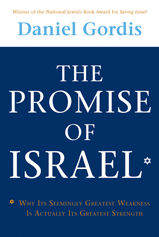
The Promise of Israel – Book Review

September 28, 2012 by Linda @ Linda's Lunacy

It is time for a FIRST Wild Card Tour book review! If you wish to join the FIRST blog alliance, just click the button. We are a group of reviewers who tour Christian books. A Wild Card post includes a brief bio of the author and a full chapter from each book toured. The reason it is called a FIRST Wild Card Tour is that you never know if the book will be fiction, non~fiction, for young, or for old…or for somewhere in between! Enjoy your free peek into the book!

You never know when I might play a wild card on you!

Today’s Wild Card author is:


Daniel Gordis


and the book:


The Promise of Israel
Wiley; 1 edition (August 28, 2012)
***Special thanks to Rick Roberson for sending me a review copy.***


ABOUT THE AUTHOR:


Widely cited on matters pertaining to Israel, Dr. Daniel Gordis has been called “one of Israel’s most thoughtful observers.” It is a task he does not take lightly. Throughout his career, Dr. Gordis has tirelessly observed, written and lectured on Israeli society and the challenges the Jewish state faces. His writing has appeared in magazines and newspapers, including the New York Times, the New Republic, the New York Times Magazine, Moment, Tikkun, Azure, Commentary Magazine, Foreign Affairs and Conservative Judaism.

Today, Dr. Gordis is senior vice president and Koret Distinguished Fellow at the Shalem Center in Jerusalem. A prolific writer, The Promise of Israel is his ninth book. In 2009, his book Saving Israel: How the Jewish People Can Win a War That May Never End received the National Jewish Book Award. His biography on former Israeli Prime Minister Menachem Begin is scheduled for release in 2014. Gordis continues to be a much sought after speaker, traveling around the world to speak on the Jewish state and the challenges to Israeli society. In addition, he regularly blogs Dispatches from an Anxious State. He and his wife, Elisheva, make their home in Jerusalem. They are the parents of a married daughter and two grown sons now serving in the Israel Defense Forces.

Visit the author’s website.

SHORT BOOK DESCRIPTION:

What Israel’s critics in the West really object to about the Jewish State, Daniel Gordis asserts, is the fact that Israel is a country consciously devoted to the future of the Jewish people.  In a world where differences between cultures, religions and national traditions are either denied or papered over, Israel’s critics insist that no country devoted to a single religion or culture can stay democratic and prosperous. They’re wrong.  Rather than relentlessly assailing Israel, Gordis argues, the international community should see Israel’s model as key to the future of culture and freedom.  Israel provides its citizens with infinitely greater liberty and prosperity than anyone expected, faring better than any other young nation. Given Israel’s success, it would make sense for many other countries, from Rwanda to Afghanistan and even Iran, to look at how they’ve done it. Most importantly, perhaps, rather than seeking to destroy Israel.

The Promise of Israel turns the most compelling arguments against Israel on their heads, undoing liberals with a more liberal argument and the religious with a more devout one. The Promise of Israel puts forth an idea that is as convincing as it is shocking-that Iran’s clerics and the Taliban could achieve what they want for their people by being more like Israel.

Product Details:

List Price: $25.95

Hardcover: 256 pages

Publisher: Wiley; 1 edition (August 28, 2012)

Language: English

ISBN-10: 1118003756

ISBN-13: 978-1118003756

Product Dimensions: 9.4 x 6.3
AND NOW…THE FIRST CHAPTER:

Introduction
ASLEEP UNDER FIRE
For I dipt into the future, far as human eye could see

Saw the Vision of the world, and all the wonders that would be;

Till the war-drum throbb’d no longer and the battle flags were furl’d

In the Parliament of man, the Federation of the world.
—Alfred Lord Tennyson, “Locksley Hall,” 18371

What struck me most about California when I started to visit it was its newness. Nothing seemed old. The cars all appeared new; the people dressed young and acted younger. To a young East Coast kid just starting a career, California seemed all about the future, almost devoid of a past.

But all of us have pasts. All of us come from someplace, and even in the shiny new West, it often takes very little for people to start talking about their lives, their deepest regrets, and their senses of how they have, or have not, honored the legacies from which they were born. It’s amazing, actually, what people tell a clergyperson, no matter how young he or she may be. When I first headed out to Los Angeles after finishing rabbinical school, I had no real conception of what awaited me. Some of what I hazily imagined actually came to be. Much did not. But one of the things that I remember most clearly is the stories that people, especially elderly people, told me, even though they barely knew me.

There was one story that I heard several times, in one form or another, always from people around the age of my grandparents. These people told me how their siblings who had arrived in America before them would meet them at the New York harbor. The new arrivals came off the boat with almost nothing to their names, but they had, in addition to their meager belongings, Jewish objects like candlesticks for the Sabbath or tefillin that they had transported with great care. The sibling (usually a brother) who had arrived in the United States a few years earlier would take the bundle with these Jewish religious objects, nonchalantly drop it into the water lapping at the edge of the pier, and say, “You’re in America now. Those were for the old country.” The men and women who told me these stories were much, much older than I was, and the events they were describing had unfolded more than half a century earlier. When I was younger and first heard them, what horrified me was the mere notion of throwing those ritual objects into the ocean as if they were yesterday’s garbage. As I grew older, I was struck by the fact that these elderly people still remembered that moment and that it troubled them enough for them to recount the story to a young person like me, so many years later.

Later still, I began to understand the deep pain and mourning implicit in those stories. There was a sense of having betrayed the world from which they had come. There was a sense of the cruelty of their brothers’ cavalier discarding of the bundles; it might have been well intentioned, but it was callous and mean, and half a century later, it still evoked such pain that they sought to talk about it.

Before we judge these siblings at the pier, we should acknowledge that both sides were right. Both the elderly Jews who told me their stories and the brothers who had tossed their possessions into the oily, filthy water reflected a profound truth. The brothers were right that there is a price of entry to the United States and that it is a steep one. In large measure, many immigrants have done as well as they have in the United States precisely because they were willing to drop bundles of memory, ethnicity, and religious observance into the harbor. And the people who told me these stories were right that the pain and the anger that they felt about that price were real, abiding, and deeply scarring. They had given up something of themselves when they came to the United States, and the scars never fully healed. Being forced to pretend that they had paid no price at all only made matters worse.

Jewish, Muslim, Buddhist, Hutu, Pashtun, or Christian—it makes no difference. All of us can imagine and even feel the visceral horror of being told to take our past and figuratively toss it into the harbor. Those immigrants were told that they were welcome, as long as they dispensed with the heritage with which they had come to their new “home.” But the story of demanding such sacrifice for acceptance is hardly over. It continues for some immigrants to the United States today, and it occurs in the international arena as well.

Sad to say, it is that same attitude that the United States (like much of the West) now exhibits toward Israel. You are welcome to join us, the West essentially says, as long as you drop your ethnic heritage in the ocean forever. We welcome you to the family of nations, but with a price: we want you to be precisely like us. Be different, and our patience will soon run out.

Later portions of this book will explain why preserving ethnic heritage is such an important human endeavor. For now, though, we ought to acknowledge how troubled we should be by saying to anyone—anywhere and at any time—that he or she must abandon a precious heritage and not transmit it. Those elderly immigrants who told me their stories had no choice when they arrived at the shores of New York. Often penniless and usually frightened, they had nowhere else to go. When their siblings took the parcels and dropped them in the water, there was little the new immigrants could do but stifle their cries and hold back their tears.

Israel, however, is not in that position. Israelis are independent, and the Jewish state rightly resists the demand that it become just like all those other states that are not based on a particular ethnic identity. Even though we rarely think of matters in these terms, the sad fact is that it is Israel’s very unwillingness to be a state like all other states in this regard, its resistance to erasing its uniqueness, that now has Israel locked in conflict with much of the West.

This book makes an audacious and seemingly odd claim. It suggests that what now divides Israel and the international community is an idea: the ethnic nation-state—a country created around a shared cultural heritage. This is what has the West so put out with Israel. Israel has lost its once-charmed status in the international arena, I argue, because of a conflict over this very idea. It is true that the Israelis and the Palestinians are still tragically locked in an intractable and painful conflict; the issues of borders, refugees, and Palestinian statehood still await resolution. But those matters, as urgent as they are, are not the primary reason for Israel’s unprecedented fall from international grace.

Israel is marginalized and reviled because of a battle over the idea of the nation-state. (The dictionary defines nation-state as “a form of political organization under which a relatively homogeneous people inhabits a sovereign state . . . a state containing one as opposed to several nationalities,” so I use nation-state and ethnic nation-state inter- changeably in this book.) Israel, the quintessential modern example of the ethnic nation-state, came on the scene just as most of the Western world had decided that it was time to be rid of the nation-state. Today, Europe’s elites wish to move in one direction, whereas Israel suggests that humanity should be doing precisely the opposite. The now young countries that emerged from what was once the Soviet Union and the former Yugoslavia are mostly nation-states; their creation—and the demise of the larger conglomerates that once included them—attests to the widespread and deep-seated human desire to live in a manner that cultivates the cultures that we have inherited from our ancestors. But many of Europe’s intellectual elites prefer to pretend that we have no lessons to learn about human difference and cultural heterogeneity from the demise of the USSR and Yugoslavia.

Israel suggests that they are wrong. The conflict in the Middle East is about borders and statehood, but the conflict about the Middle East is over universalism versus particularism, over competing conceptions of how human beings ought to organize themselves.

The purpose of this book is to explain the ancient origins of this conflict, how this tug-of-war about an idea has developed, how Israel got caught in it, and, most important, how a world bereft of the idea that Israel represents would be an impoverished world. Instead of being so commonly maligned, Israel ought to be seen as a beacon among nations, a remarkably successful nation that has persevered despite wars fought on its borders and that has brought prosperity to its people despite a shared history of misfortune. Israel has secured significant rights for all of its citizens, including even those who reject the very idea of Israel’s existence. All of this has been accomplished because of Israel’s commitment to the future success of the Jewish people, not in spite of it.

What is at stake in the current battle over Israel’s legitimacy is not merely the idea on which Israel is based, but, quite possibly, human freedom as we know it. The idea that human freedom might be at risk in today’s battles over Israel might seem far-fetched or hyperbolic. This book will argue that it is not, and that human beings everywhere thus have a great stake in what the world ultimately does with the Jewish state.

Imagine a world in which instead of maligning Israel, the international community encouraged emerging ethnic nations to emulate Israel. Egyptians, for example, may have demonstrated for regime change and for democracy, but they did not gather to demonstrate against Islam or their Arab identity. They have no plans to become the “America” of Africa, secular and heterogeneous. They wish (or so the most Western of them claim) both to celebrate their Muslim heritage and thousands of years of Egyptian history and to join the family of modern democratic nations. As they do so, to whom can they look for a model of a stable, prosperous, and open state based on a shared religion and heritage? There is no denying that Egypt, Syria, Pakistan, and many other Muslim countries would benefit from being more like Israel instead of hoping for its destruction.

Yet it is not only Middle Eastern and Muslim nations that should be looking harder at the Israeli experiment. The whole world would benefit from thinking in terms of the questions Israel raises. The United States, Sweden, Brazil—it makes no difference. All citizens of every nation would benefit from asking themselves, explicitly, what values they hope their nation will inculcate in its citizens, what culture they are committed to preserving and nourishing. Such conversations would change the way Israel is seen in the world, but they would also change how everyone else sees his or her own country—and how people come to think about the reasons that countries actually exist.

The idea of a state for a particular ethnicity strikes many people as problematic, immoral, and contrary to the progress that humanity has made in recent decades. The idea of a state meant to promote the flourishing of one particular people, with one particular religion at its core—a state created with the specific goal of Jewish revival and flourishing—strikes many people as worse than an antiquated idea. It sounds racist, bigoted, or oppressive of minorities.

When the United Nations voted to create a Jewish state in 1947, the fires of the Second World War had barely been extinguished. Dispossessed Jews were still wandering across Europe by the thousands. The enormity of the genocidal horror that the world had allowed the Nazis to perpetrate was still sinking in. One of the many effects of that horrific period of history was that despite opposition from many quarters, creating a state for the Jews seemed like the right and expedient thing to do.

But times have changed. Memories of the Shoah are fading.* Jews are no longer dispossessed refugees; in most of the world, they are settled and prospering, and today it is the Palestinians who are stateless. Postwar Europe has decided that it was unfettered nationalism that led to the horrors of the two world wars; therefore, much of Europe’s intellectual elite now believes that the nation-state is a nineteenth- century paradigm that should be relegated to the dust heap of history,*Holocaust means “burnt offering” or “sacrifice to God.” I thus avoid it when discussing the Nazi genocide of the Jews. Europe’s Jews were not sacrificed; they were tortured, murdered, and annihilated. There is a profound difference. This book uses the word Shoah, which means “utter destruction” (see Zephaniah 1:15 and Proverbs 3:25), to honor that distinction just like those bundles that were dropped into the harbor to sink out of sight.

In several important respects, Jews drew the opposite conclusion from the horrific century they had just endured and barely survived. Battered by Europe and by history, the Jews emerged from the Shoah with a sense that more than anything, they needed a state of their own. Just as some of the world thought that it might move beyond nations, the Jews (who had dreamed of a restored Zion for two millennia) now intuited that nothing could be more urgent than finally re-creating their state. Zionism and postwar Europe were thus destined for conflict.

Zionism was not a matter of mere refuge; it was a matter of breathing new life into the Jewish people (the subject of my book Saving Israel: How the Jewish People Can Win a War That May Never End), of reimagining Judaism for a world after destruction, and, ironically, of insisting on the importance of the very difference that the Nazis had focused on as they perpetrated the horrors of the Shoah. What was at stake was much more than differing views about the nation- state; it was a battle over fundamental worldviews. For it was not only the nation-state on which Europe and postwar Jews differed. At issue was also the whole question of human differentness. To much of the world, the racially motivated genocide of twentieth-century Europe suggested that human difference ought to be transcended.

At our core, it therefore became popular to assert, human beings are largely the same. Our faces may have different shapes and our skin colors may differ, but those are simply superficial variations. We may speak different languages, but our aspirations are very similar. We may cherish different memories, but the future we create can be a shared one. Because human beings are essentially similar, this argument goes, the countries that separate peoples and cast a spotlight on their differences should now be dissolved, too. John Lennon put this idea to music in his song “Imagine”: “Imagine there’s no countries / It isn’t hard to do / Nothing to kill or die for / And no religion too.”

We might well have expected the Jews to embrace this vision. After all, since it was their difference that had condemned them to the horrific fate of the Shoah, we might have thought that the Jews would enthusiastically join the quest for a world without difference. In a world without difference, the Jews might finally be safe. But here too the Jews disagreed.

The Jews disagreed because whether or not they could articulate it, they intuited that they and their tradition have been focused on differentness from the very outset. The image of Abraham as the world’s first monotheist says it all: Jews have long been countercultural. And they have celebrated difference in many ways. The Talmud itself notes that it is differentness that is the very essence of humanity: “If a man strikes many coins from one mold, they all resemble each other,” it asserts. “But the Supreme King of Kings . . . created every man in the stamp of the first, and yet not one of them resembles his fellow.”

Difference matters, Judaism has long said, not just for individuals, but for peoples, too. Later in this book, we will see how this commitment to differentness became so central to Jewish life and thought. But this commitment to difference, to celebrating the uniqueness of the Jewish people, was never meant to foster rejection of those who are not Jewish. Indeed, at its best, Jewish celebration of difference is also about the celebration of the other. The horrific excesses of human his- tory have certainly led many to see in difference a frightening and terrible idea; too often the distinction between “us and them” was drawn to make it seem okay for “us” to kill “them” and for “them” to kill “us.” Israel, however, with all of its imperfections, has for decades been drawing lines and then reaching across them. Israelis do not pretend that being a global citizen is either sufficient or terribly meaningful, yet they willingly send medical teams to Japan or Haiti in a crisis. The Jewish state is a country that could very soon be annihilated without a moment’s notice by Islamic extremists in Iran and that has been at war with Arab countries since even before its independence, but its national government has more democratically elected Muslim officials than all the other non-Muslim states combined—more,  even, than the United States.

The Jewish tradition is replete with references to the differences between the Jews and other nations. From the very outset, Jews saw part of their purpose as being different, as having something to say that the rest of the world ought to hear. In a world without difference, the very point of Jewishness would be lost. Whether or not they could articulate it, Jews understood that being just like everyone else, even if that might somehow make them physically safer, was not at all what thousands of years of Jewish tradition and survival had been about.

Even after the horrors of what they had just experienced because of their difference, most Jews emerged from the Shoah determined to preserve their collective inheritance. Some enthusiastically embraced international movements like socialism or communism. But many more sought to celebrate their difference, to breathe new life into the unique way of living that had been theirs for thousands of years, to gather up the fragments of their texts from a century in which both their books and their bodies had been burned indiscriminately, and to fashion anew their libraries, memories, holidays, and long-dormant language. To do that, they realized, they would need a state. They had prayed for one for two thousand years, but now, after the Shoah, that age-old prayer took on newfound urgency.

Increasingly, however, the rest of the world has decided that it does not agree. The United Nations and much of the international com- munity are notoriously complicit in the push to rob Israel of its status as standard-bearer for the nation-state idea. As long as a country that is openly rooted in a religious or cultural tradition prospers, as long as its democracy serves its citizens well, as long as it defies the predictions of secular scholars and pundits who believe that religion and ethnicity are the handmaidens of imperialism and fascism, it must be reviled.

Otherwise, it could prove the intellectual elites of western Europe and North America, who believe that an experiment like Israel can- not work, wrong. What was once a well-meaning, liberal academic orientation to religion, ethnicity, and statehood has morphed into an international diplomatic witch hunt that smacks once again of intolerance for the Jew and the Jewish state, that is filled with the sense that in any conflict in which Israel finds itself, the Jewish state must be wrong. Sides are being chosen daily, and Israel’s fate is being decided, often by people who do not realize what is really being disputed. My simplest goal in writing this book, beyond advocating one side or the other, is just to make clear to people what the two sides are and what is really at stake in this battle of ideas.

Israel’s real problem, this book demonstrates, is that the state of Israel was founded to move the Jews to precisely the condition that the rest of the Western world was trying to avoid. For that reason, too, the Jewish state was almost bound to be in conflict with the West. That is why many in the ostensibly forward-thinking international community have now decided, consciously or not, that it is time to bring the Jewish state to an end. They propose to do so without armies and without violence. They will bring Israel to its knees with words, with philosophical and principled arguments, and with appeals to the loftiest moral standards. After all, they note, both apartheid South Africa and the Soviet Union were felled in large measure by a widely shared international view that they were illegitimate, founded on ideas that were simply indefensible.

Given this new tactic, those who believe in the ongoing importance of a Jewish state need to ask themselves the right questions and provide principled answers. Can an argument really be made for a state that seems so out of sync with the direction of modern progress? In the twenty-first century, is there really a place for a country that defines itself as Jewish (or committed to any other ethnicity, for that matter); that does not see all its citizens as equally central to its mission; and that unabashedly declares that one religion, one people, one ethnicity, and one heritage will be more essential to its national life than any others? How could Israel’s supporters possibly defend such a country?

Such a state seems anathema to everything that many of us have been taught to believe.

Many of Israel’s supporters have no idea what to say in response to such attacks on Zionism and its legitimacy, and Israel has paid a terrible price for the silence of today’s Zionists on these issues. Its international status has plummeted with scarcely a countervailing word being said about why the Jewish state matters. The campaign to defend Israel has been sporadic, reactive, defensive, almost entirely devoid of theoretical argument, and focused almost exclusively on the conflict with the Palestinians. Zionists’ failure to make a case for their particular sort of state creates the impression that they know they cannot really justify Israel’s existence; it feeds a suspicion that they have decided that it would be best to stay under the radar, because when push comes to shove, what Israel is cannot be thoughtfully defended.

But in today’s world, Zionists can no longer afford the luxury of staying below the radar. The questions are too powerful, the focus on Israel too intense. No longer can the case for Israel be made simply by hoping that no one raises the question of whether the idea of a Jewish state is defensible. Those who believe in the importance and the legitimacy of the state of Israel need to be able to explain why a country founded for a particular people, ethnicity, tradition, and religion has a place—indeed, a noble one—in the twenty-first century.

Therefore, Israel’s response to these challenges has to be equally thoughtful and no less compelling. Israel’s defense must also be based on moral claims. In a nutshell, what needs to be said is this: What is at issue between Israel and the international community is whether ethnic and national diversity ought to be encouraged and promoted. Israel has something to say about the importance of human difference that is at odds with the prevailing attitudes in the world today. It is a country that insists that people thrive and flourish most when they live in societies in which their language, their culture, their history, and their sense of purpose are situated at the very center of public life.

Let’s address one common objection right at the outset. Contrary to what many naysayers will claim, a country does not have to be entirely homogeneous to accomplish this. As even PBS (which is often very critical of Israel) once noted, “As a Jewish state, [Israel] is both homogenous and multiethnic.”3 As strange as it may sound, countries can have a predominant ethnic character and be deeply tolerant of minorities at the same time. Every nation-state has minorities, and part of the challenge to the majority is not only to accommodate the minority but also, even more, to help those citizens flourish.

Indeed, flourishing is the key issue. Israel is a country based on a belief that human beings live richer and more meaningful lives when those lives are deeply rooted in a culture that they have inherited and that they can bequeath. Human life flourishes most when a society’s public square is committed to conversations rooted in that people’s literature, language, history, narrative, and even religion. There is the possibility of a more fully integrated life in the nation-state in which all these spheres of human life overlap to much greater extents than other countries make possible. Ultimately, human diversity will be protected most by an amalgam of countries, each of which exists for the flourishing of a particular people, culture, way of life, and history and, at the same time, engages in an open and ongoing dialogue with other cultures and civilizations.

The world celebrated the Arab Spring in 2011, but that story is not yet fully written. Will it bring democracy? Rights for women? Tolerance for gays and lesbians? It would be foolish and naive to expect that we’ll see any such progress soon. Still, there’s no reason that Egypt couldn’t develop an engagement with modernity while staying committed to the dignity of its past. There’s no reason that Libya, finally freed of Muammar Gaddafi, couldn’t in theory develop both intellectual openness and a freedom of the press, since both could actually strengthen the nation’s understanding of Islam. Syrians too could someday live richer and more meaningful lives if those lives were deeply rooted in a unique Syrian culture coupled with freedom of choice at the voting booth. Even Iran could discover that Iranians flourish most when the public square is committed to open conversations rooted in Persian literature, language, history, and narratives, in constant and vigorous dialogue with the West and other civilizations that have very different takes on core human values.

But does the West really want to see those countries develop in that way? If Egypt remained deeply and profoundly Egyptian, and Iranian culture and history defined the Iranian public square, would the West approve, or would the West say that as long as those countries insist on maintaining those ancient attachments, they are not fully liberated? Would the West not still tell them they are doing it wrong? Perhaps. But the West would be wrong; difference and uniqueness do not mire people in the past but rather give them guidance and meaning as they build a better future.

This is now the challenge for Zionists. Precisely because Israel stands for a conviction not held by most of the enlightened world today, the time has come to defend Israel by boldly addressing the conversation that is at the heart of this book. It is time for Zionists not only to discuss borders, settlements, security, and Palestinian state- hood but also to proclaim that what is at stake is not just the Jewish state, not just the future of the Jews, but a profound vision for how humanity can most compellingly chart its future. No other country in the developed world calls into question today’s assumption that eradicating differentness is the best path toward human flourishing. That is precisely what makes Israel so countercultural, so divisive, and often so maligned. And that is what makes Israel so vitally important.

Today’s infatuation with the notion that human difference ought to be papered over is not the first time that the world has embraced a dangerous and dead-end philosophical fad. In the past century alone, humanity has lived through infatuations with unfettered social- ism, then with communism, and even with the belief in the nobility of imperialism. But Israel is a reminder to the world that there are moments when someone—be it a prophet in biblical times or a nation-state in today’s international community—has to speak truth to power and insist on what is right and true, regardless of how unpopular the idea is. Israel represents the argument that the nation- state is not a fad, but rather an ancient and still compelling vision for humanity.

Like the ancient Hebrew prophets Isaiah, Amos, and Hosea, who were highly unpopular in their own time but whose visions for humanity are still cited thousands of years later, the state of Israel is meant to be a clarion call to all of humanity. If Israel can survive (and that is by no means certain), history may one day come to thank the Jewish state for its role in reminding humanity what it stood to lose when it began to pretend that our differences were unimportant.


MY REVIEW:

I’m about half way through The Promise of Israel. I’m finding it to be a very interesting read.  I really like how the author takes current views in the world media about Israel, explains them, and gives examples of what should be done. He explains the history of a nation state, and why they should exist. Including why Israel should exist.

The Promise of Israel is full of current information about Israel as well as the history of Israel. The author quotes numerous experts as well as the Bible to make his point.

The Promise of Israel is a great book for anyone interested in current events, the nation state, universalism, and Israel.

Filed Under: Books, Reviews

Homeschool Class Rings

September 27, 2012 by Linda @ Linda's Lunacy

Getting a class ring is a rite of passage. Ninth and tenth graders can’t wait until they are juniors so they can get their class ring. For many years, homeschoolers weren’t able to order class rings. Now that has changed and there are companies that make homeschool class rings.

When I was in high school, I bought my own class ring. Since I worked all the way through high school, it was possible for me to do that.  I still couldn’t afford the ring I really wanted, though. I love gold jewelry better than silver. Even way back then, lol, gold rings were expensive. The company my school used offered a ring for someone like me. I remember it was called a saddleback. The gold was over a base of something else. Not silver, I just can’t remember what it was. Here’s a pic:


homeschool class ring


Why, yes, it does say 1981. lol  Oh, the design in the middle is batons with the word “twirling”  across the middle. I was a majorette. The baton twirling kind, not the kind that marches in front of the band with the really big baton. This ring is practically an antique! lol

My oldest son didn’t want a class ring. Well, he would have gotten one if I had paid for the whole thing. I said he had to pay for half himself. So he didn’t want one.

My oldest daughter wanted one and was willing to pay for half. She ordered her’s from Walmart. We both were happy with it, it’s a very nice looking ring.

My next two students are talking about getting class rings now, so we’ve been looking around.

Of course, our first stop was Walmart. You can order Walmart’s class rings online now. So much easier.

Homeschool Diploma.com is now offering class rings. They have a very nice selection in several price ranges.

You can also go with Jostens. They have been providing schools with class rings for years. Their rings are gorgeous, just really expensive.

There is also a huge selection of  Class Rings on Amazon. Earn enough gift cards and you could even get one for free!


So it is possible for homeschoolers to get a really nice class ring, with a wide price range.


Filed Under: Homeschool

Homeschool Legacy- Birds of a Feather Unit Study- Review

September 25, 2012 by Linda @ Linda's Lunacy

As part of The Schoolhouse Review Crew, I received a download version of Homeschool Legacy’s  Birds of a Feather Once a Week Unit Study. Homeschool Legacy and Once a Week Unit Studies were started by a homeschooling mom of 16 years. She designed the unit studies for students to have more fun learning and for moms to have more fun teaching.


Photobucket


These once a week unit studies are for students of all ages. Your whole family can have fun learning together. Once a week unit studies are just that. You set aside one day a week to work on the study. The rest of the week, you do your regular books and read the individual and family read alouds from the study. On unit study day, you set aside your regular books and have fun doing all the activities and projects in the unit. The units vary in length, some are 4 weeks, some are up to 8 weeks long.

An added feature of the once a week unit studies is the students can earn Boy Scout and American Heritage Girls badges by completing the studies. The book tells you exactly what the student needs to accomplish to earn the badge. If you have any scouts in your family, this is a great way for the family to help them work towards their badges.


Photobucket

The Birds of A Feather Once a Week Unit Study I received gets kids excited about science while studying some of God’s most beautiful creations. This unit study is 4 weeks long, so we were able to complete it during the time I had to work on this review.

I did this study with my 12 year old, 6th grade son. We had a lot of fun together doing this study. I am very impressed with the amount of information, book & movie lists, activities in this unit study. There are suggestions for individual and family reading. Movie suggestions for family movie night and great field trip ideas. Even themed based devotions are included. You start each week by reading the lesson from the book, then branch out into the other activities.

We read about birds and John James Audobon. We looked at numerous drawings and paintings by him. We watched Fly Away Home together. (A very good movie, by the way) We did lots of activities and projects together. Here are a few of the things we did. (The memory card with the rest of the pictures has disappeared. so annoying!)

One of the projects he did was this milk carton bird feeder. He did this all by himself. I showed him the picture in the book and read him the instructions. He did all the rest. It’s still hanging on our porch.

milk carton bird feeder


We also dissected owl pellets. Two of the other kids joined us for this activity. Here’s one of the sheets they sorted the bones onto. All these bones came from one owl pellet. Very interesting.

owl pellet bone sorting guide

He did an owl coloring sheet. He was clearly in a hurry when he did this. He also did one of a cardinal, our state bird.

owl coloring sheet

There are no required books or activities. There are plenty of suggestions, though. For example, can’t find the books on the suggested list? That’s ok, find another one from the same category to read. If we had read all the books suggested, watched all the movies, did all the activities and went on all the field trips, it would have taken much longer than four weeks to complete. There is so much to choose from that you can choose what works best for your family. There are scheduling tips on the website to help you fit in your regular studies and the once a week unit study.

I highly recommend the once a week unit studies as a fun, and educational, addition to your regular studies. We really liked Birds of a Feather.

While I received a download PDF ebook, this product is only available as physical book. The Birds of a Feather Once a Week Unit Study sells for $15.95 on the website.


Photobucket


*Disclosure of Material Connection: I received a download PDF version of this book in the hope that I would mention it on my blog. Regardless, I only recommend products or services I use personally and believe will be good for my readers. My opinions are my own. I am disclosing this in accordance with the Federal Trade Commission’s 16 CFR, Part 255: “Guides Concerning the Use of Endorsements and Testimonials in Advertising.”

Filed Under: Homeschool Reviews

What’s For Dinner?

September 24, 2012 by Linda @ Linda's Lunacy


The Menu:

Saturday – Sabbath- Make ahead meals- Hamburgers cooked over the fire, carrots, homemade baked beans

Sunday – soup & sandwich day – Homemade tomato soup, grilled cheese

Monday – chicken – Homemade Chicken Nuggets, salad

Tuesday – pizza/pasta – Homemade  pizza using our homemade pizza crust, carrot sticks

Wednesday – super simple – Cincinnati Style Chili, green beans

Thursday – beef – Tacos with all the fixings, including homemade sour cream and homemade taco sauce, on homemade tortillas

Friday – Sabbath Dinner –  Oven Fried Chicken, Oven Roasted Zucchini and Onions,  quinoa


For more ideas, visit Menu Plan Monday

Filed Under: In The Kitchen With Linda

« Previous Page
Next Page »
For God so loved the world that He gave His only begotten Son, that whoever believes in Him should not perish but have everlasting life.

For God did not send His Son into the world to condemn the world, but that the world through Him might be saved.

John 3:16-17 NKJV


< WOWBouquet’s Mother’s Day flower delivery – brighten Mom’s day with fresh blooms.

Get new posts by email:

<<Earth Day Deals Continue, Mother's Day Gifts Await — Save Up to 68% at Imarku!

Enter My Current Giveaway!


$10 Amazon Gift Card - ends 3/7 US

$75 Amazon Gift Card or Paypal Cash - ends 3/9 US CAN

$10 Amazon Gift Card - ends 3/14 US


Plexus Breast Chek Kit Take charge of your health! The Plexus Breast Chek Kit is designed for women to easily perform monthly self-examinations to help detect changes in their breasts.

Search


Archives

Categories

Momentum Influencer Network Member
Great American Pure Flix VIP Ambassador
WOWBouquet offers fast and reliable flower delivery for any celebration.

Designed By: Wacky Jacquis Designs